
Right now it's tailoring — canvas, tape, and a lot of hand stitching that nobody will ever see. Before that it was wire sculpture, pencil drawings, and computers built into things that were never meant to hold one. All of it is still here.
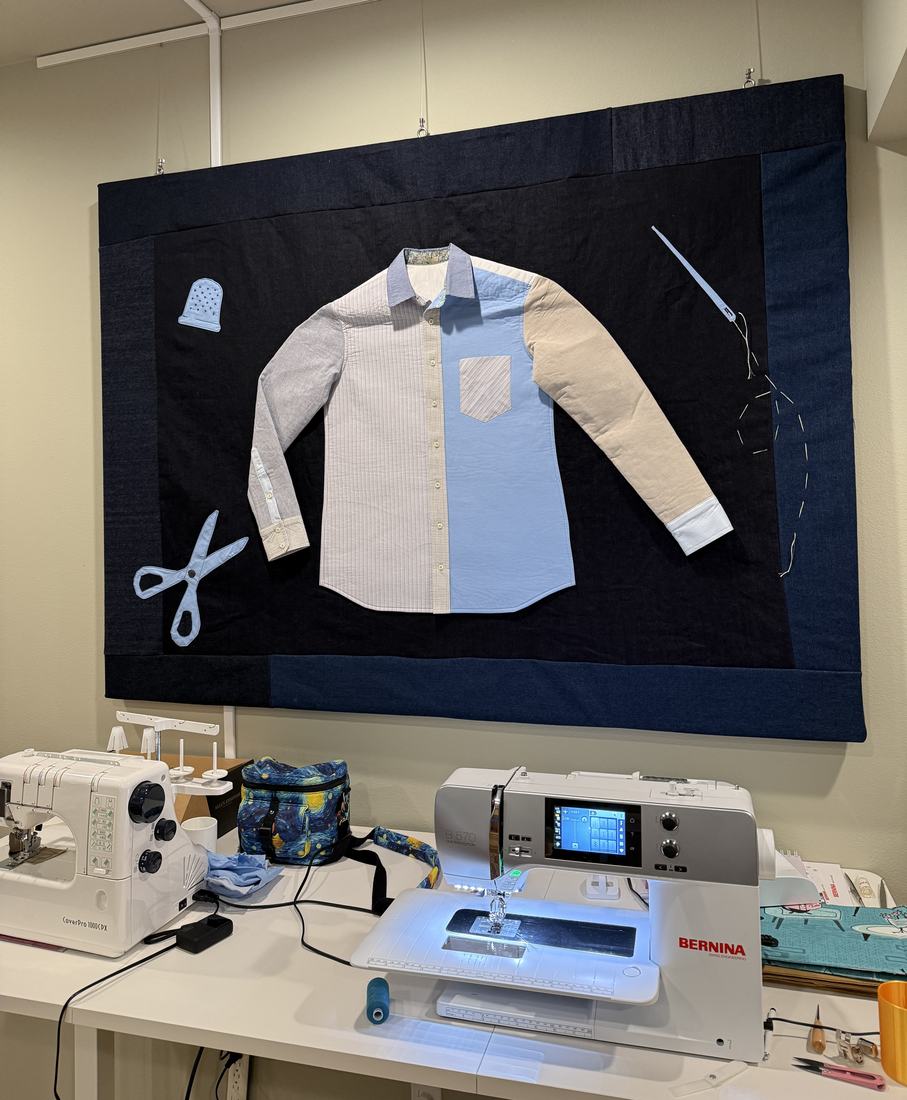
Denim and shirting
A shirt built out of other shirts — striped poplin, chambray, khaki, a gingham collar — appliquéd onto a dark denim ground with a denim border. The thimble, the scissors and the threaded needle are pieced too. It hangs over the machines in the sewing room.
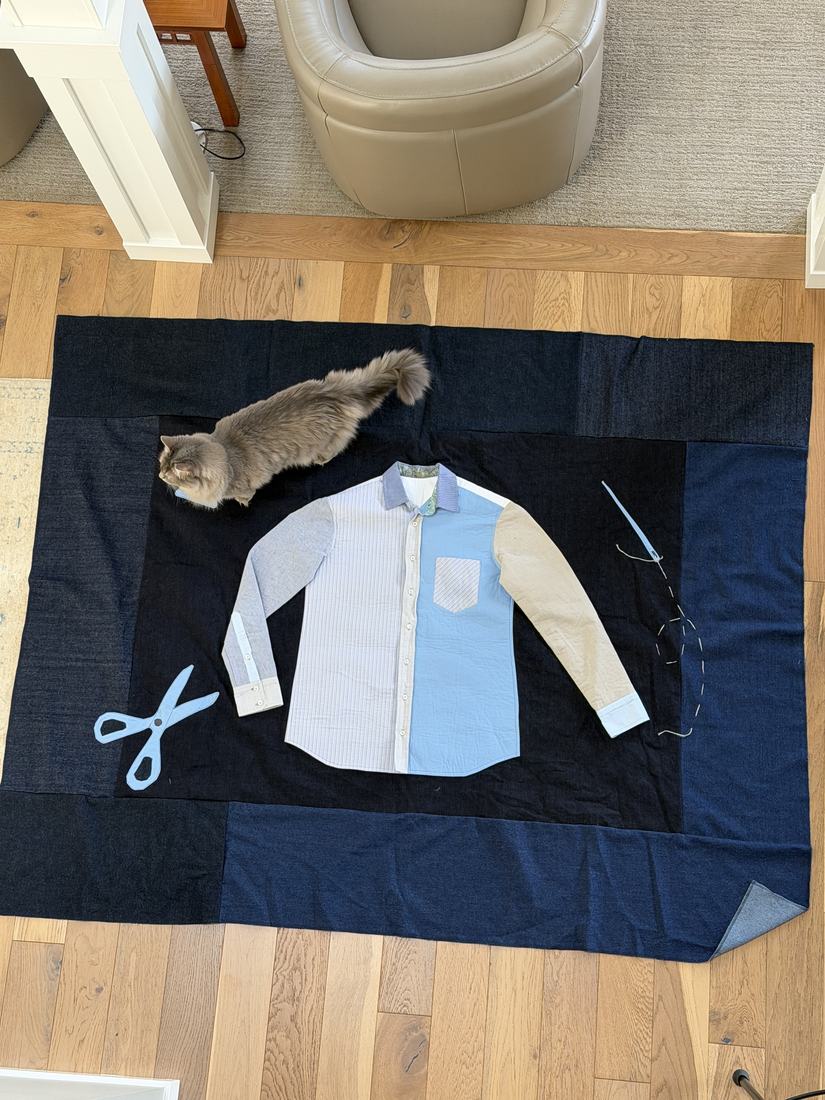
Laid out on the floor, which was the only surface big enough.
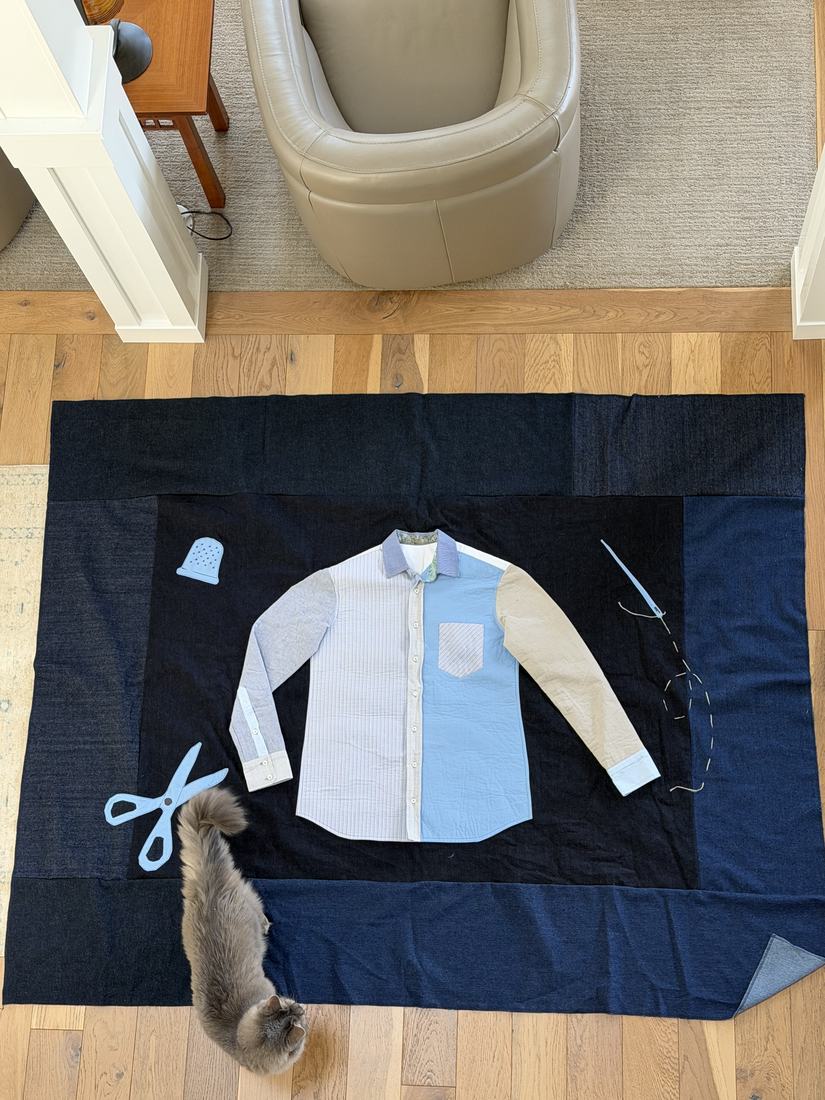
Checking the borders before anything was stitched down. Supervised throughout.
Glen plaid wool, brocade lining
Two buttons, flap pockets, lined in a gold paisley brocade. Six stages from a taped lapel to wearing it with trousers.
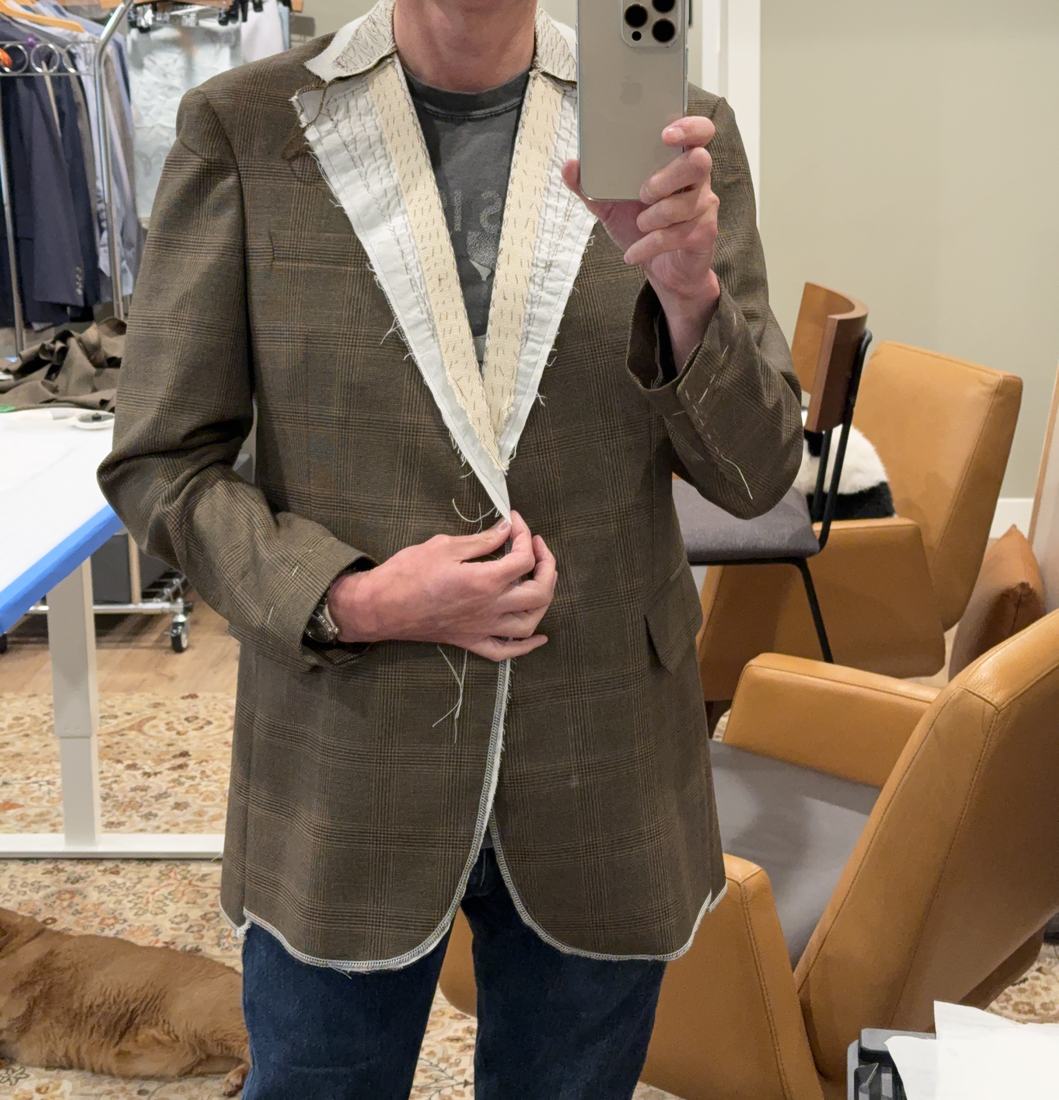
Shell fitting. Canvas and tape still showing down the lapel, hems serged and open.
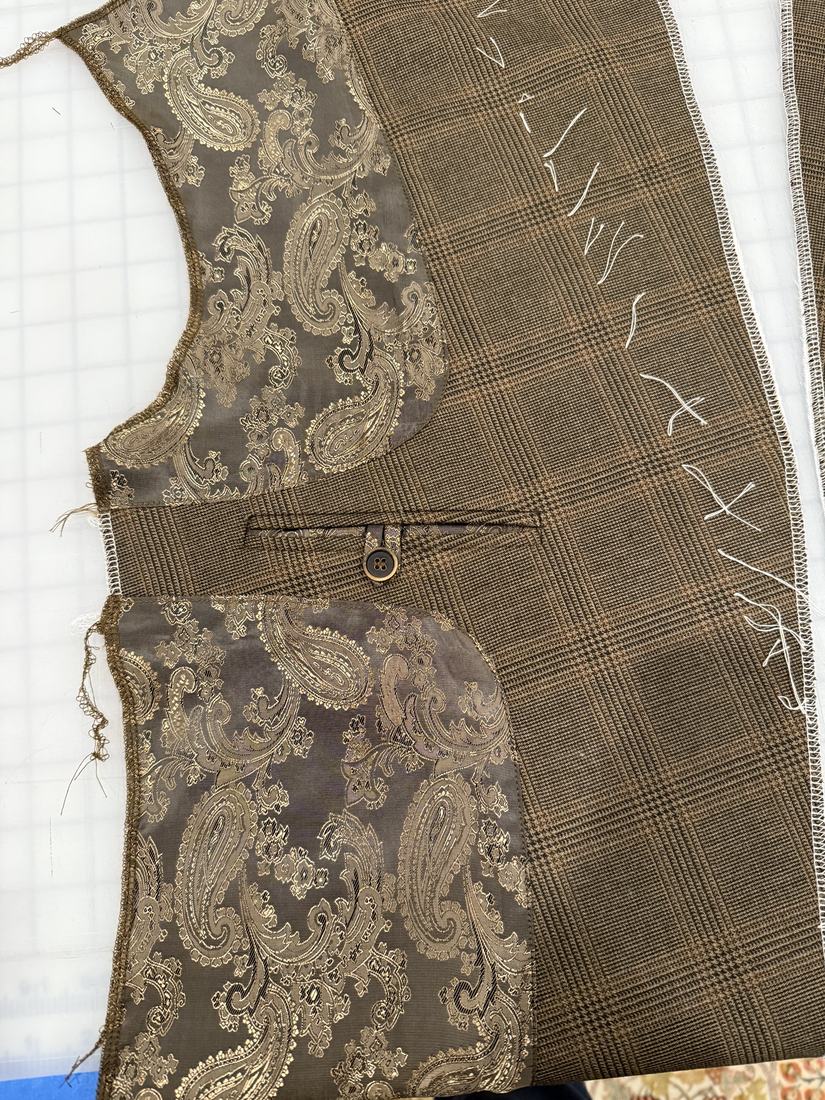
One front, flat. The brocade facing is on and the welt pocket is already cut and finished.
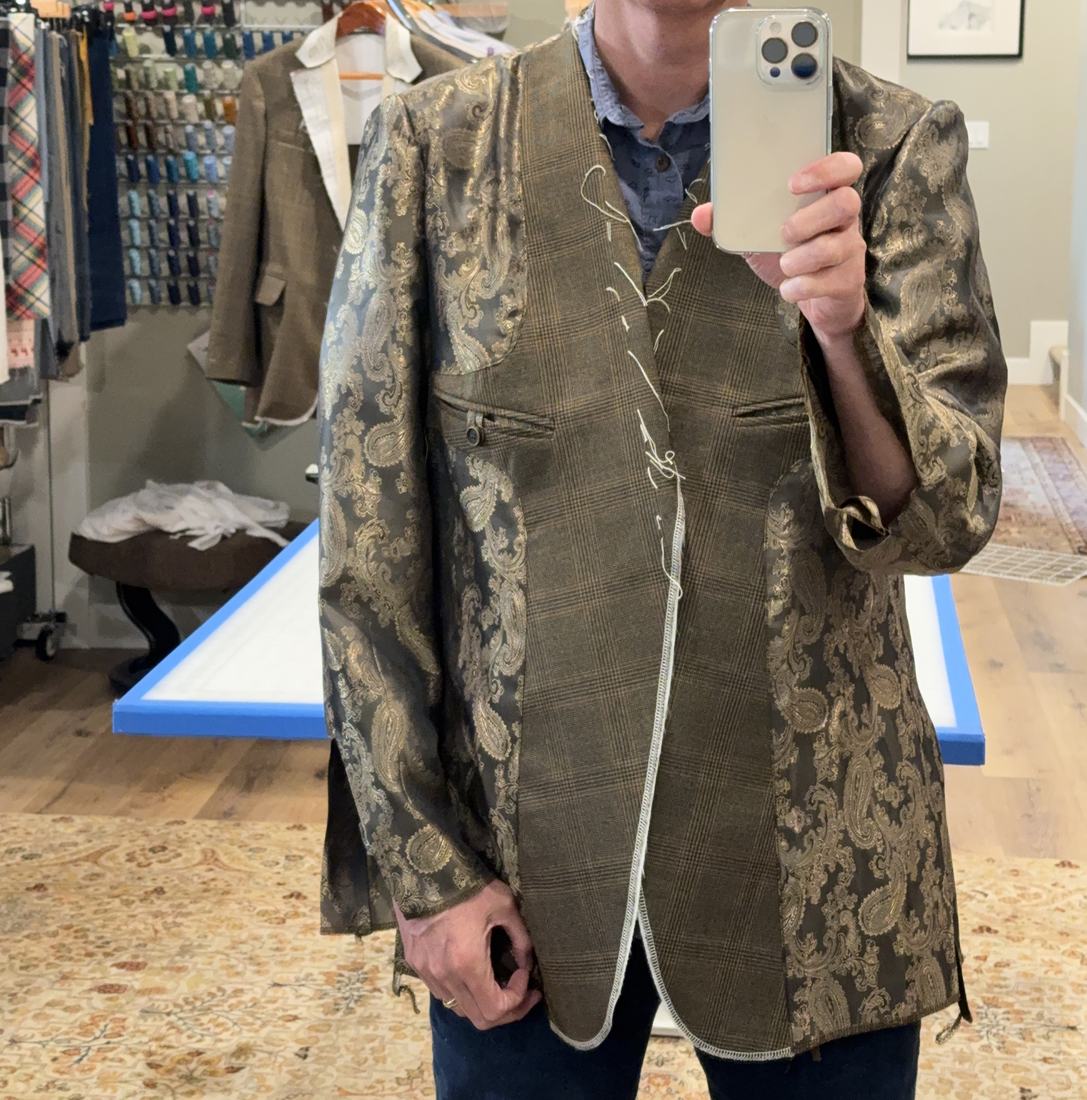
Lining fitting. Basting thread down the front edge, nothing pressed yet.
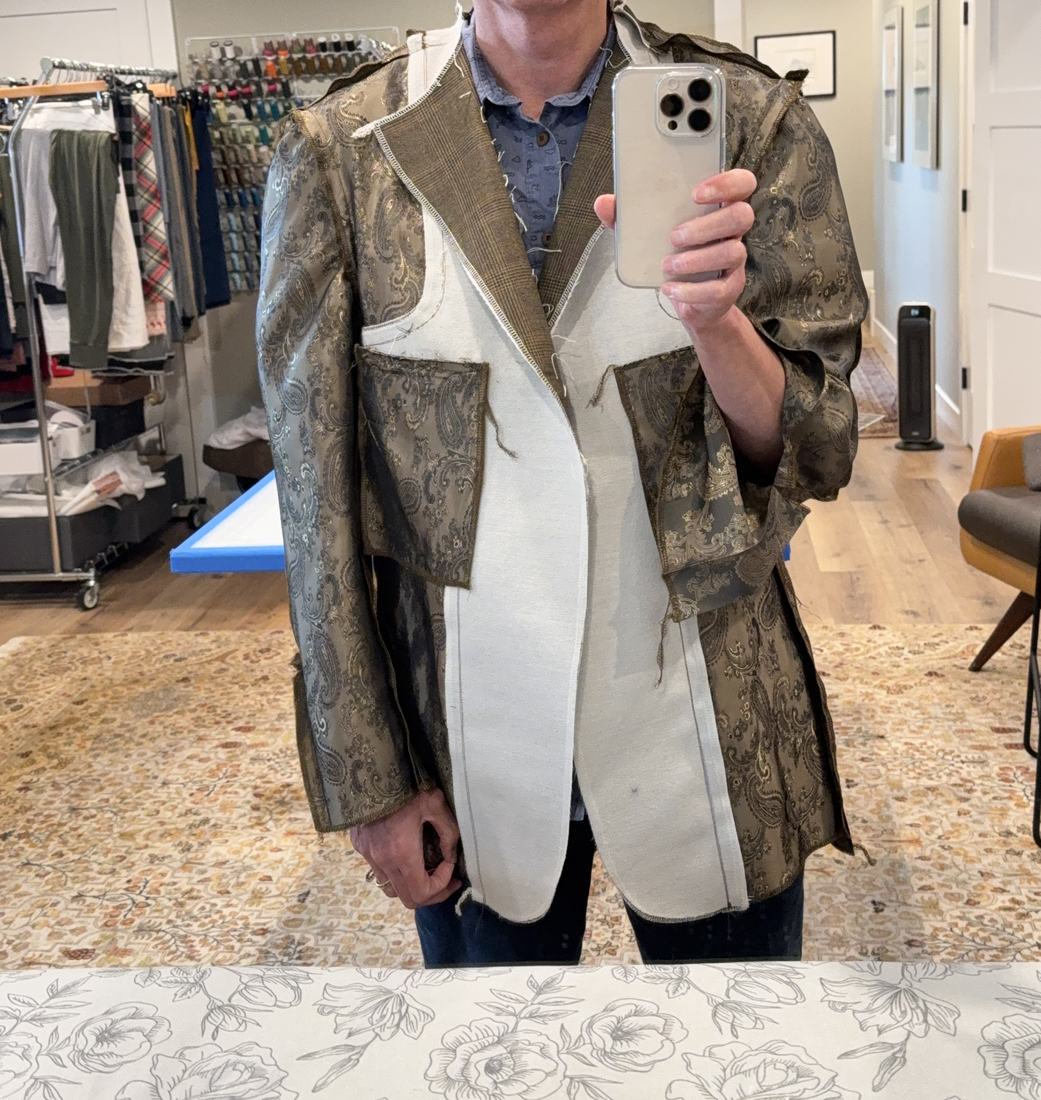
Canvas and lining tried on together, before the shell closes over them.
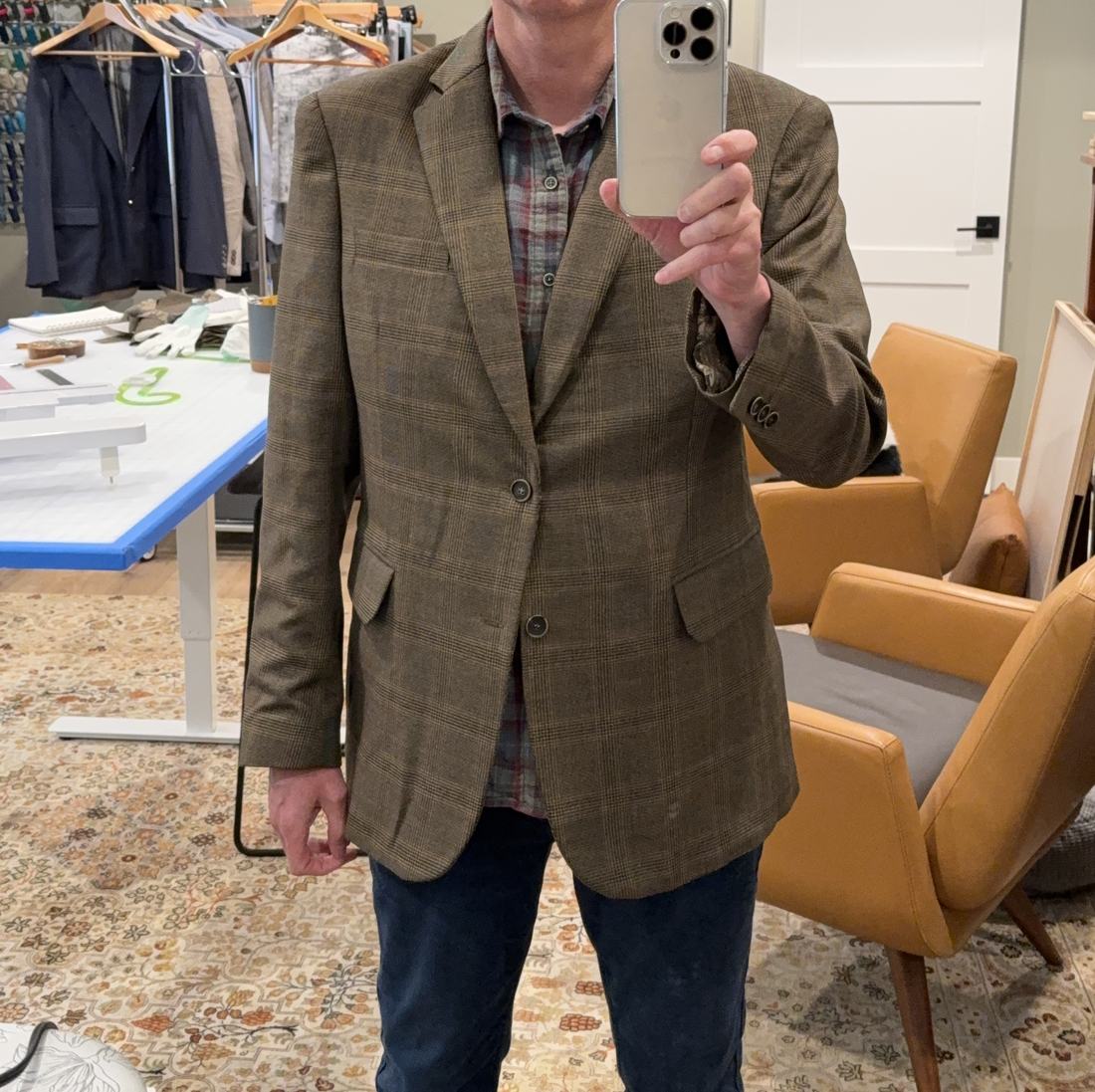
Finished and buttoned, worn over a flannel shirt.
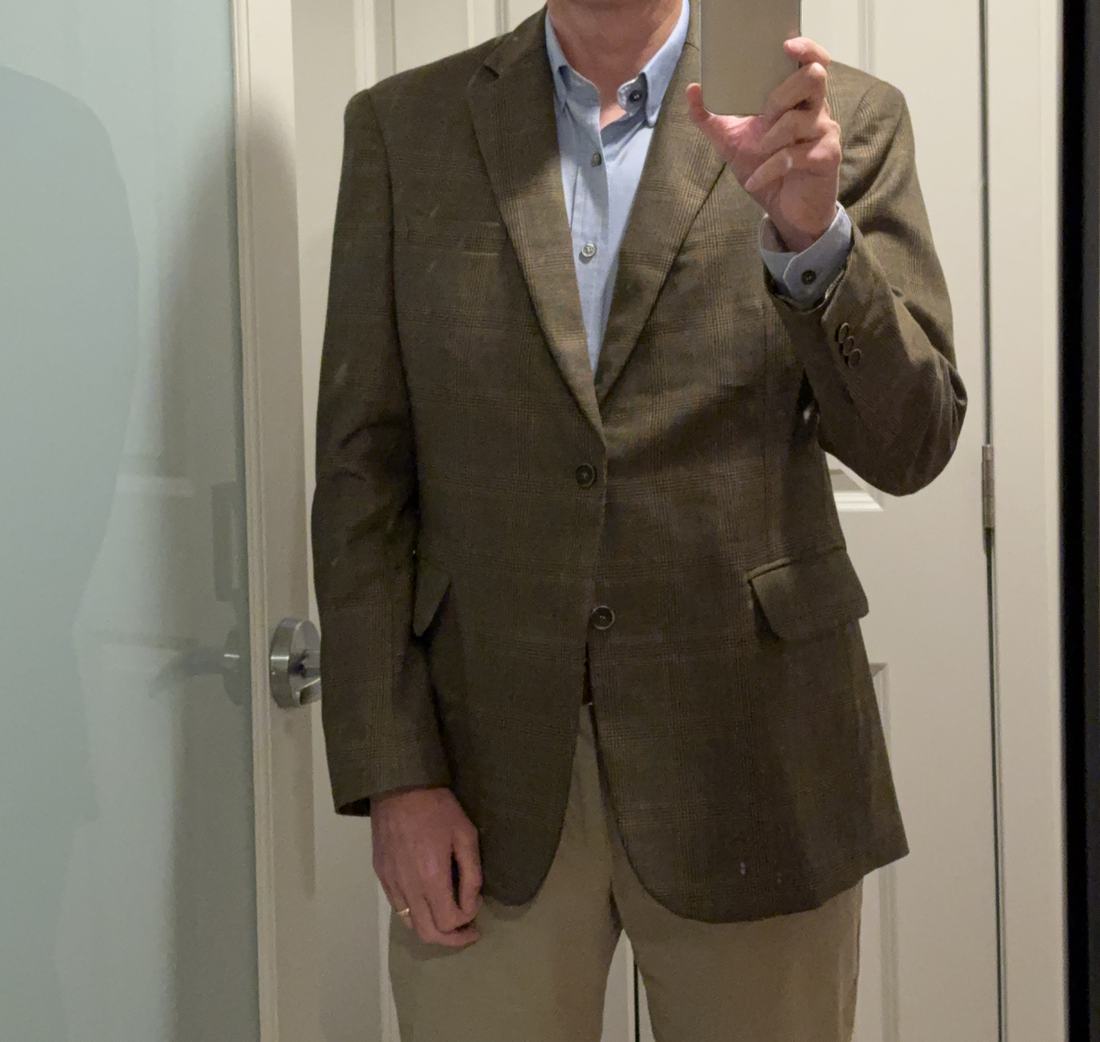
The same jacket with trousers, which is what it was really cut for.
Olive wool, paisley lining
Hand-canvassed, taped through the lapel roll, and lined in a red paisley that mostly stays hidden. Nine stages from flat fronts to finished cuffs.
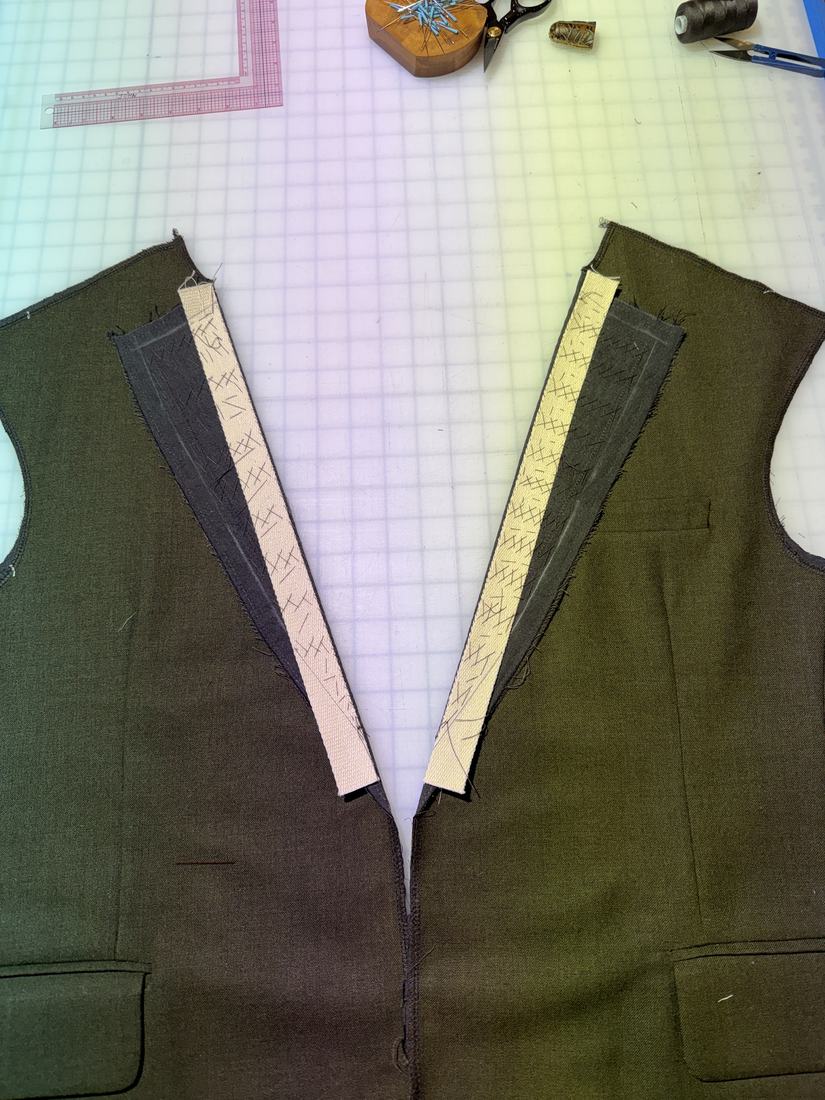
Both fronts, canvas basted in and the roll line taped. The pad stitching sets the lapel's curve before anything gets pressed.
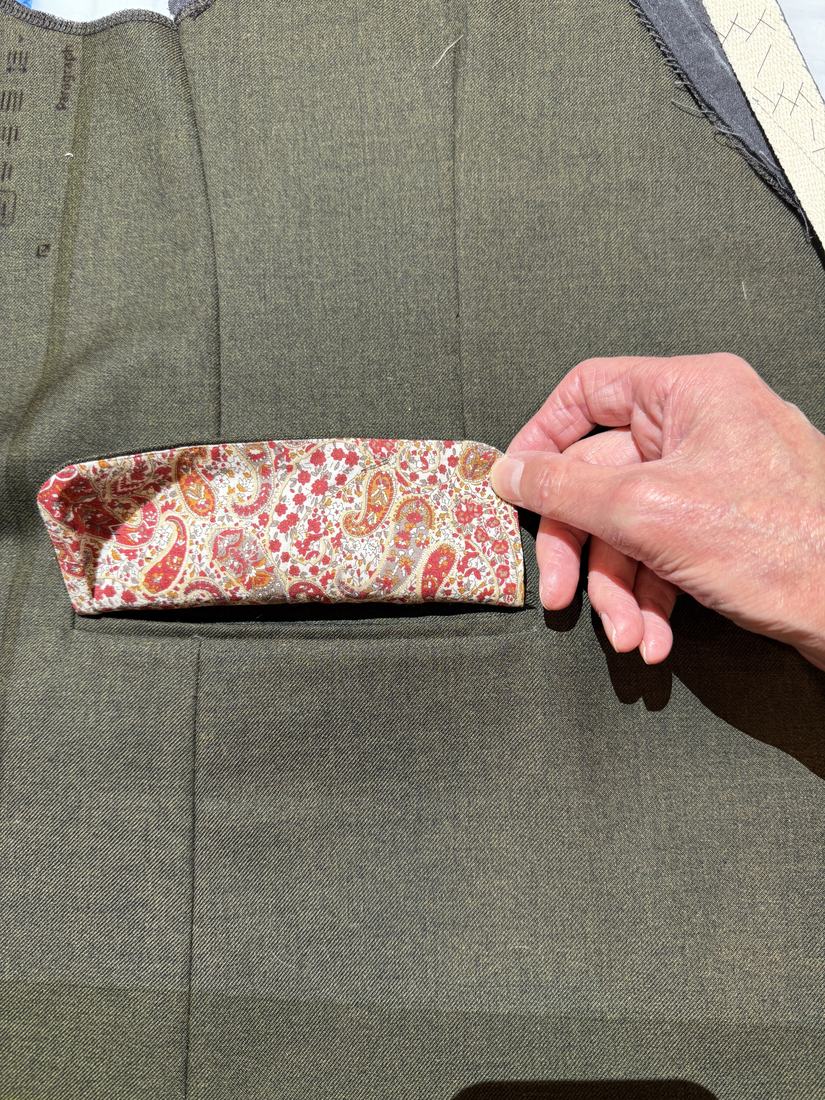
Welt pocket faced in the paisley — the lining print turning up where it isn't expected.
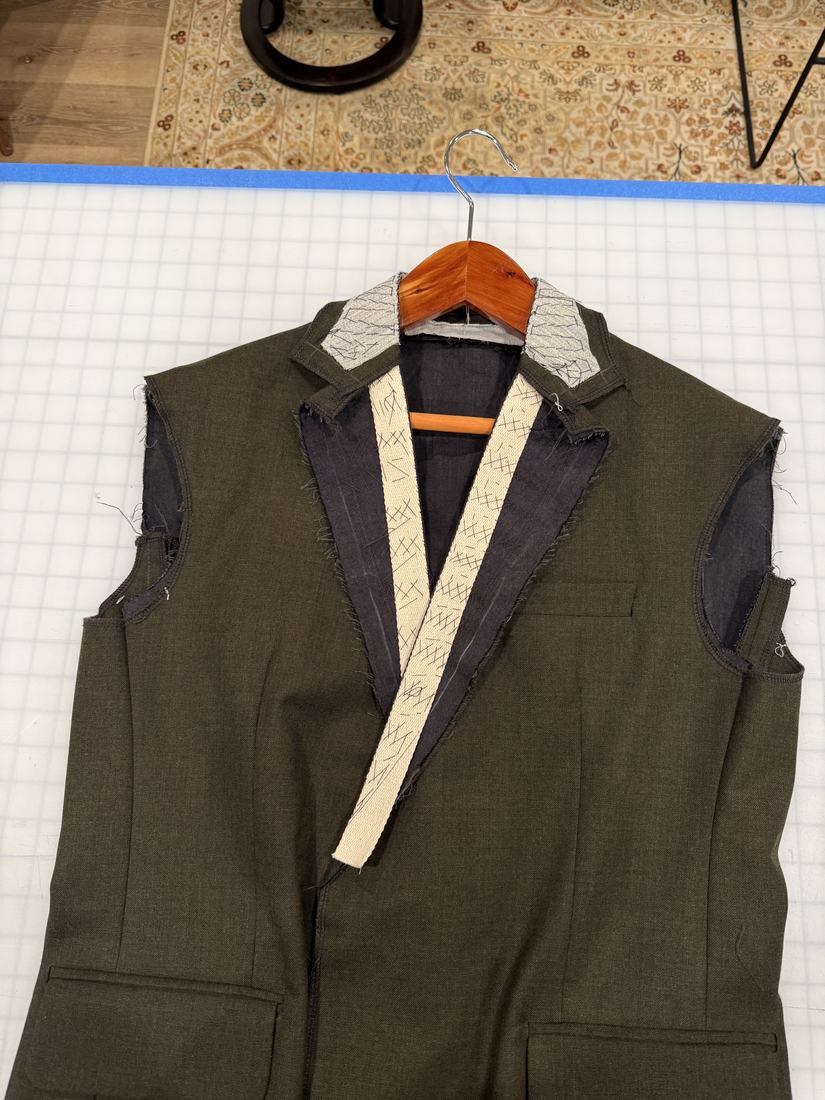
Shell on the hanger. Collar on, lapels taped, every edge still raw.
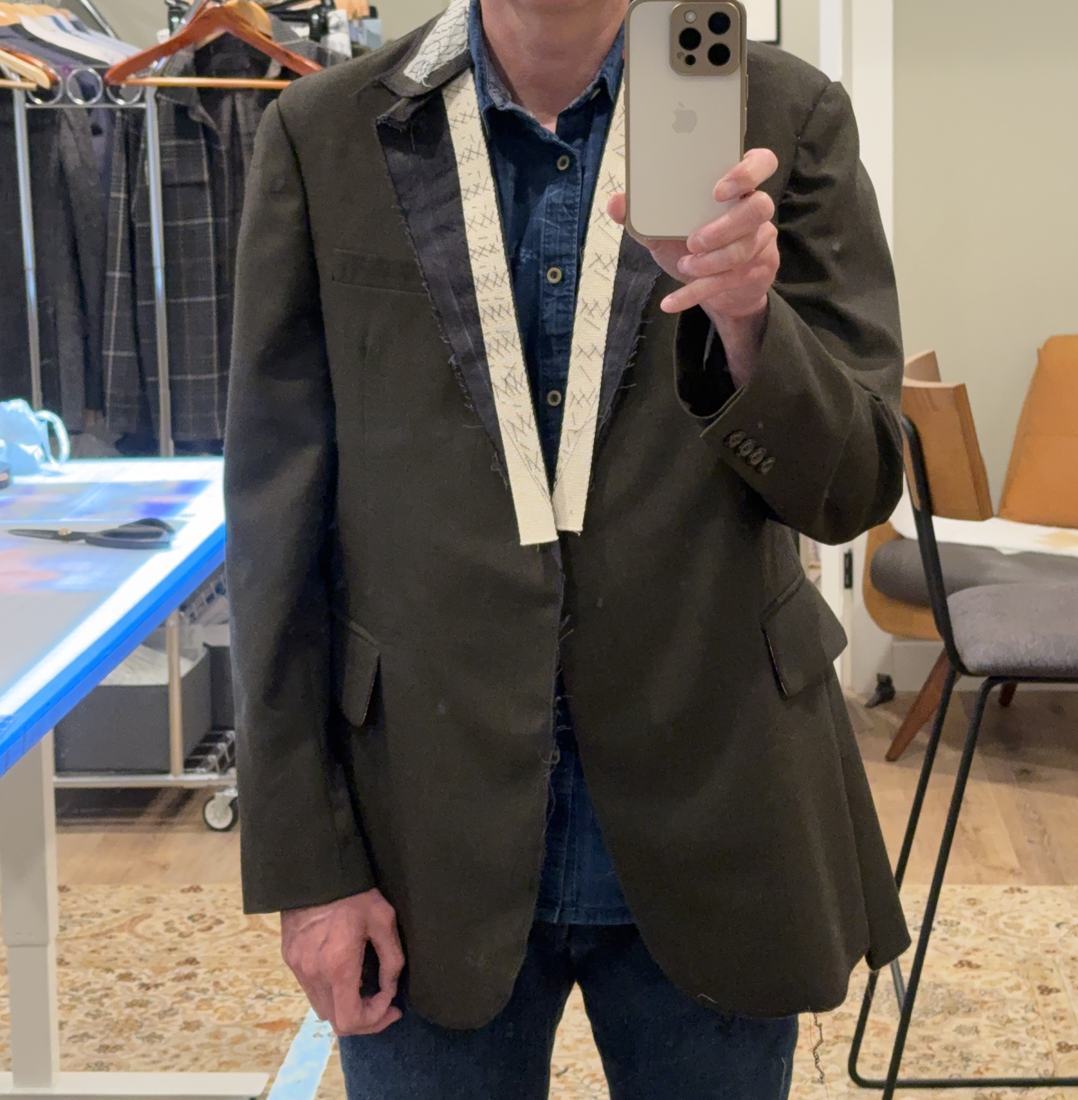
First fitting with the canvas and tape still hanging out. Sleeves on, nothing finished.
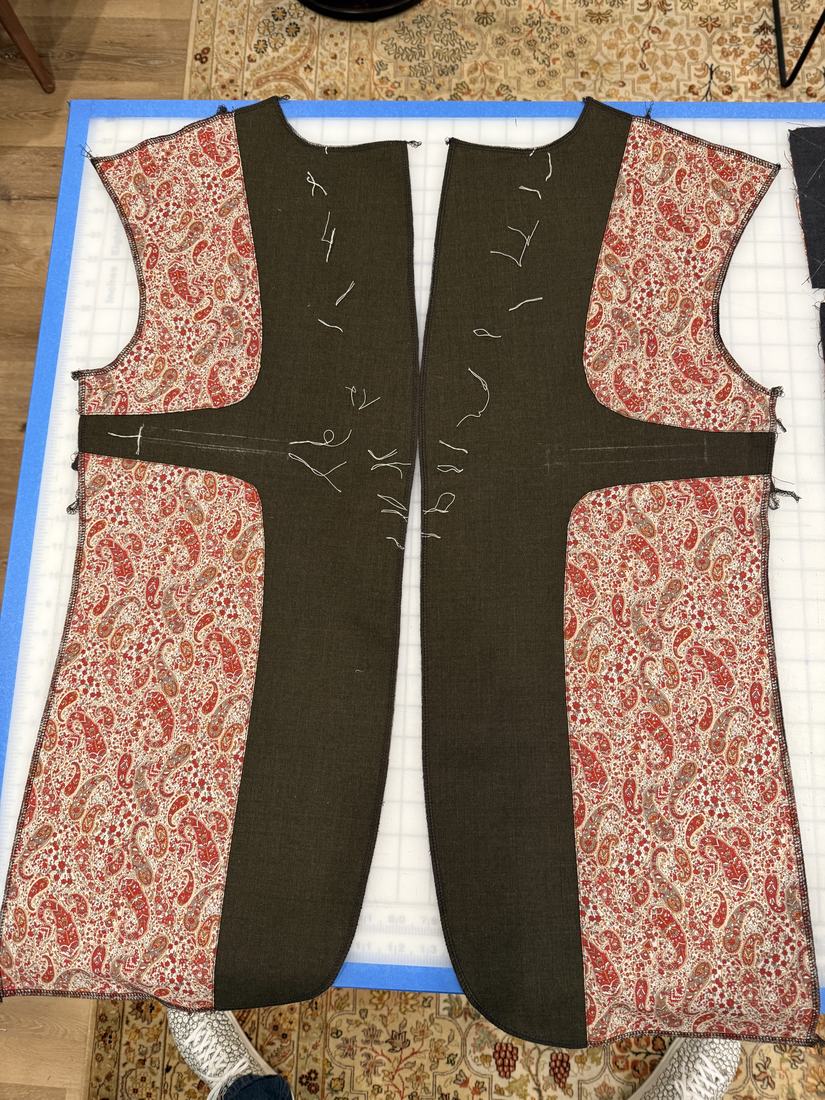
The lining unit laid out flat before it goes in — olive facings joined to paisley panels.
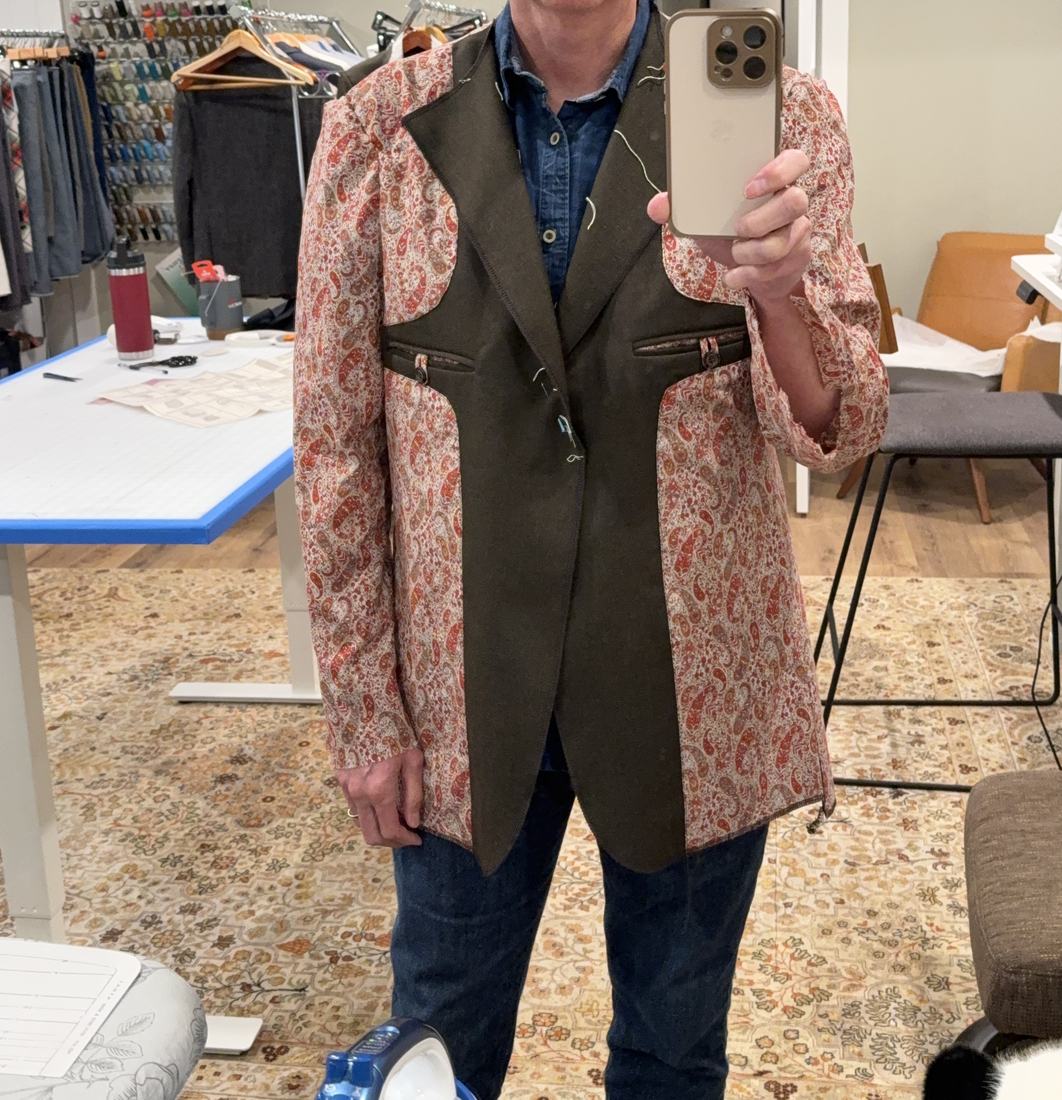
Lining tried on by itself to check the shoulder before committing it to the shell.
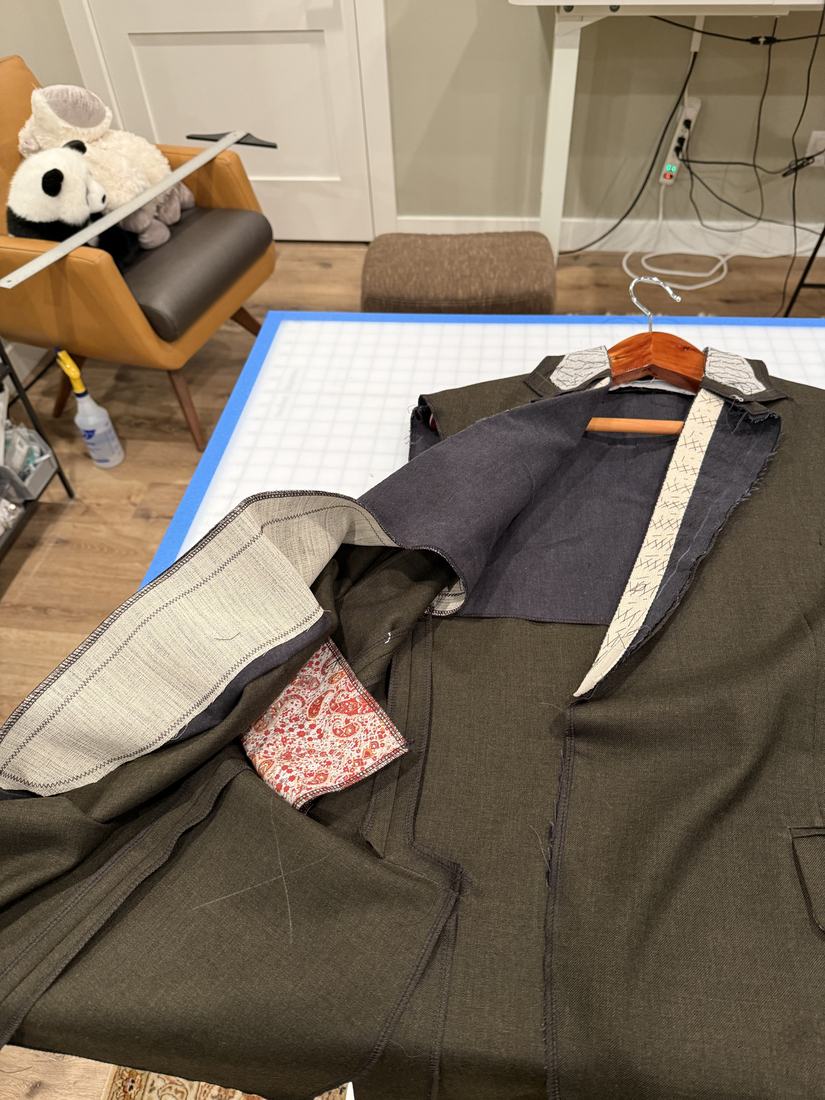
Sleeve turned out. Everything that makes the shape sit right happens on this side.
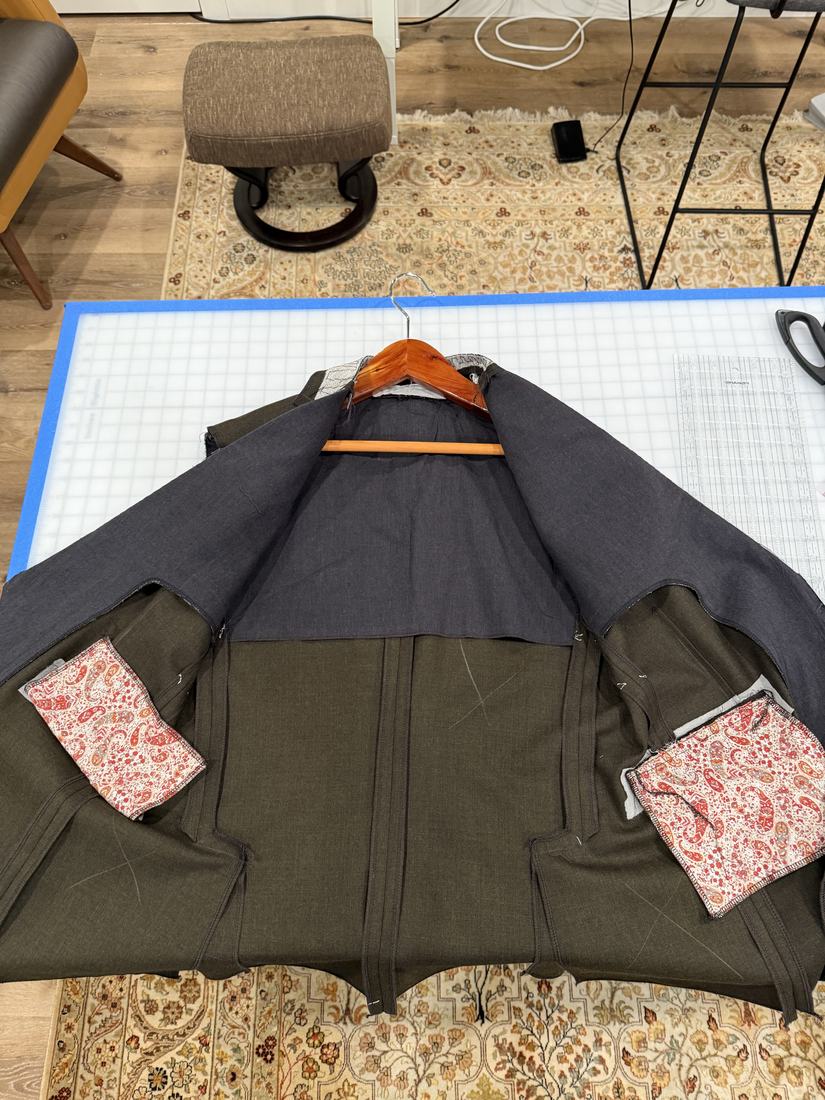
Lining in, with paisley pocket bags at the fronts and a chambray upper back.
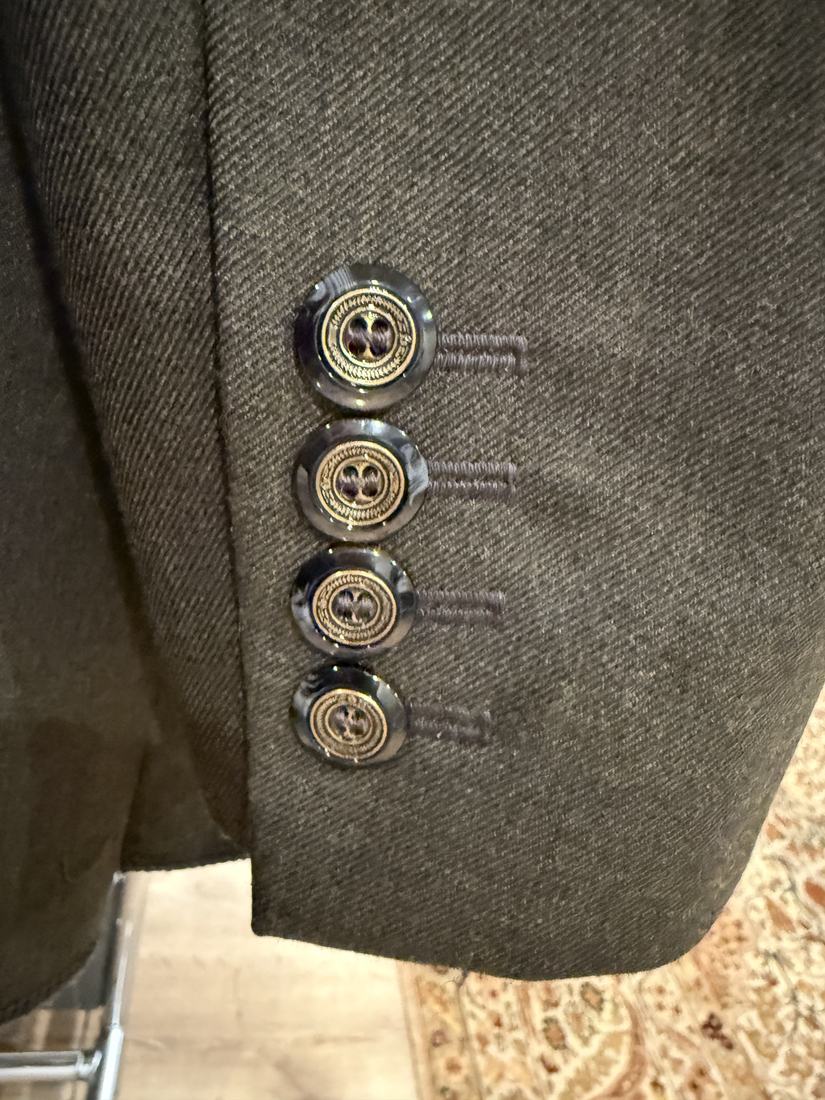
Four at the cuff, with the buttonholes worked to match.
Grey cotton flannel
A plain grey shirt with the interest hidden inside — a darker check behind the collar stand and up the cuff placket, where only the wearer sees it.
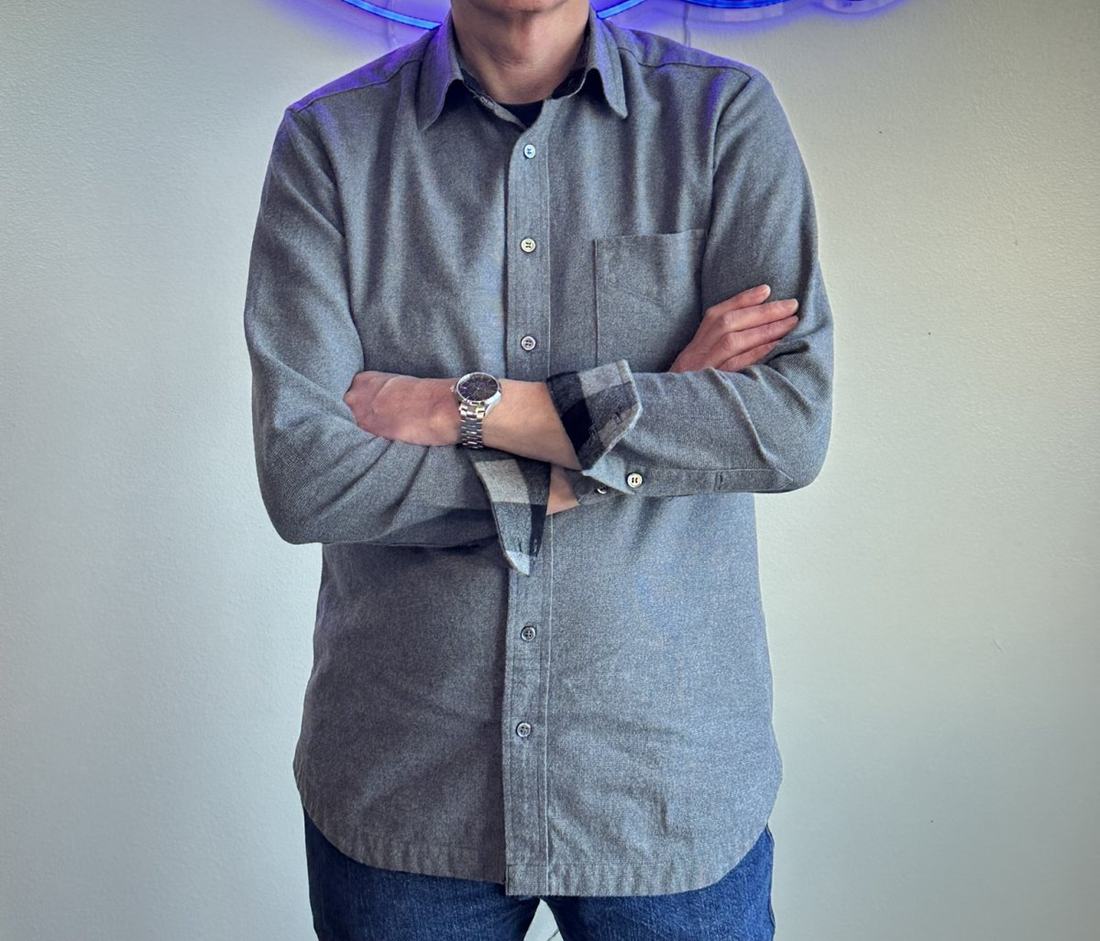
Worn. Chest pocket, and a collar that sits how I wanted it to.
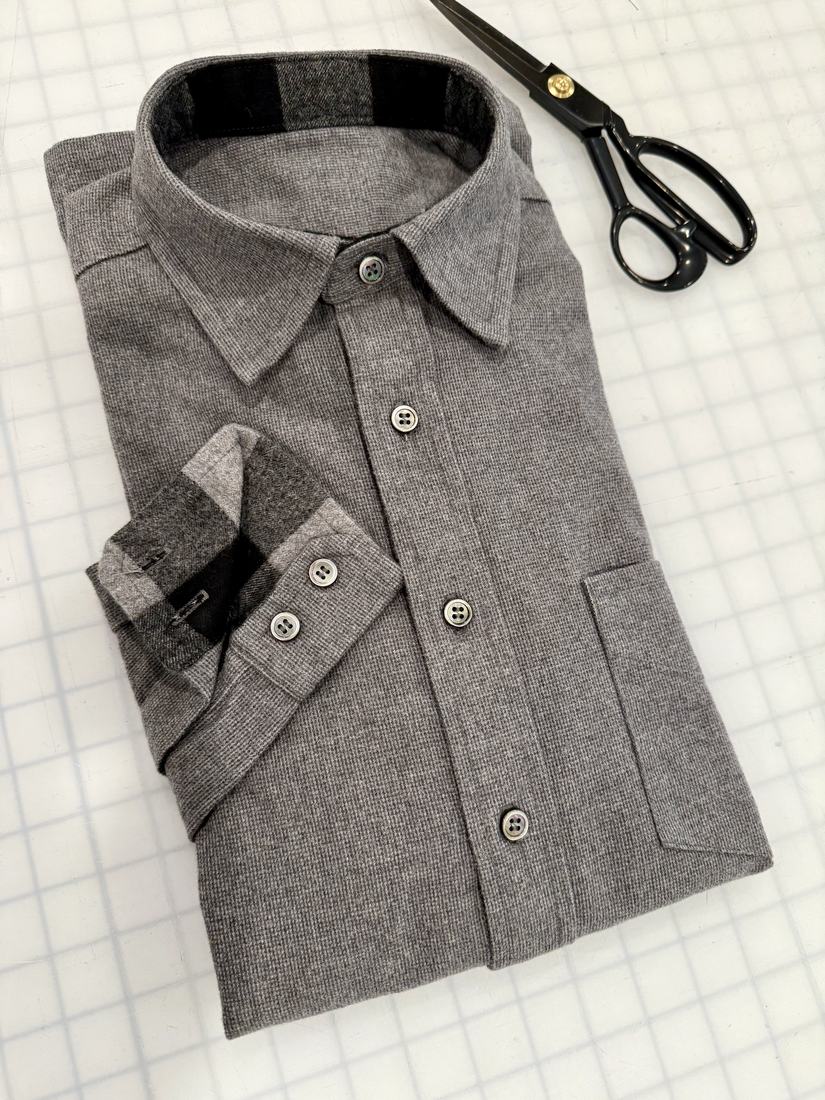
Cuff turned back. The placket is faced in a darker check.
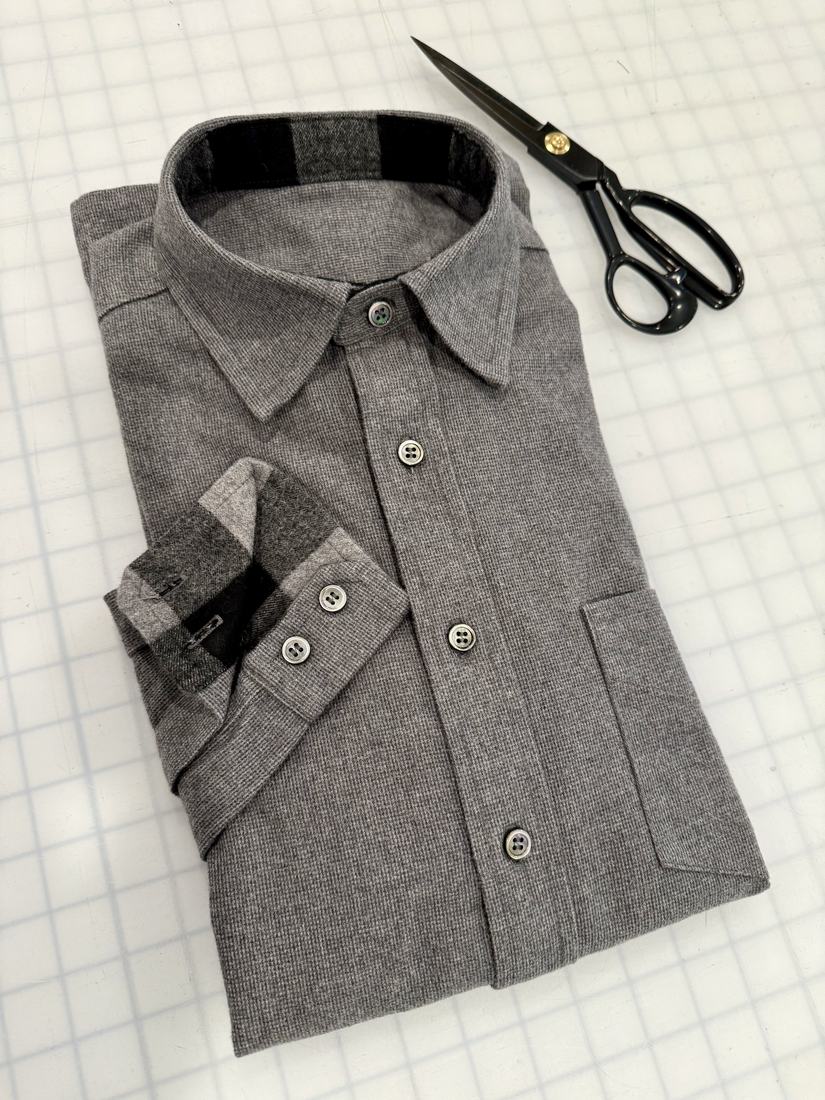
The same trick behind the collar stand.
Blue cotton, white facings
The dressier version of the same idea: a fine blue weave outside, crisp white inside the collar stand and up the cuff placket, with smoke-grey buttons.
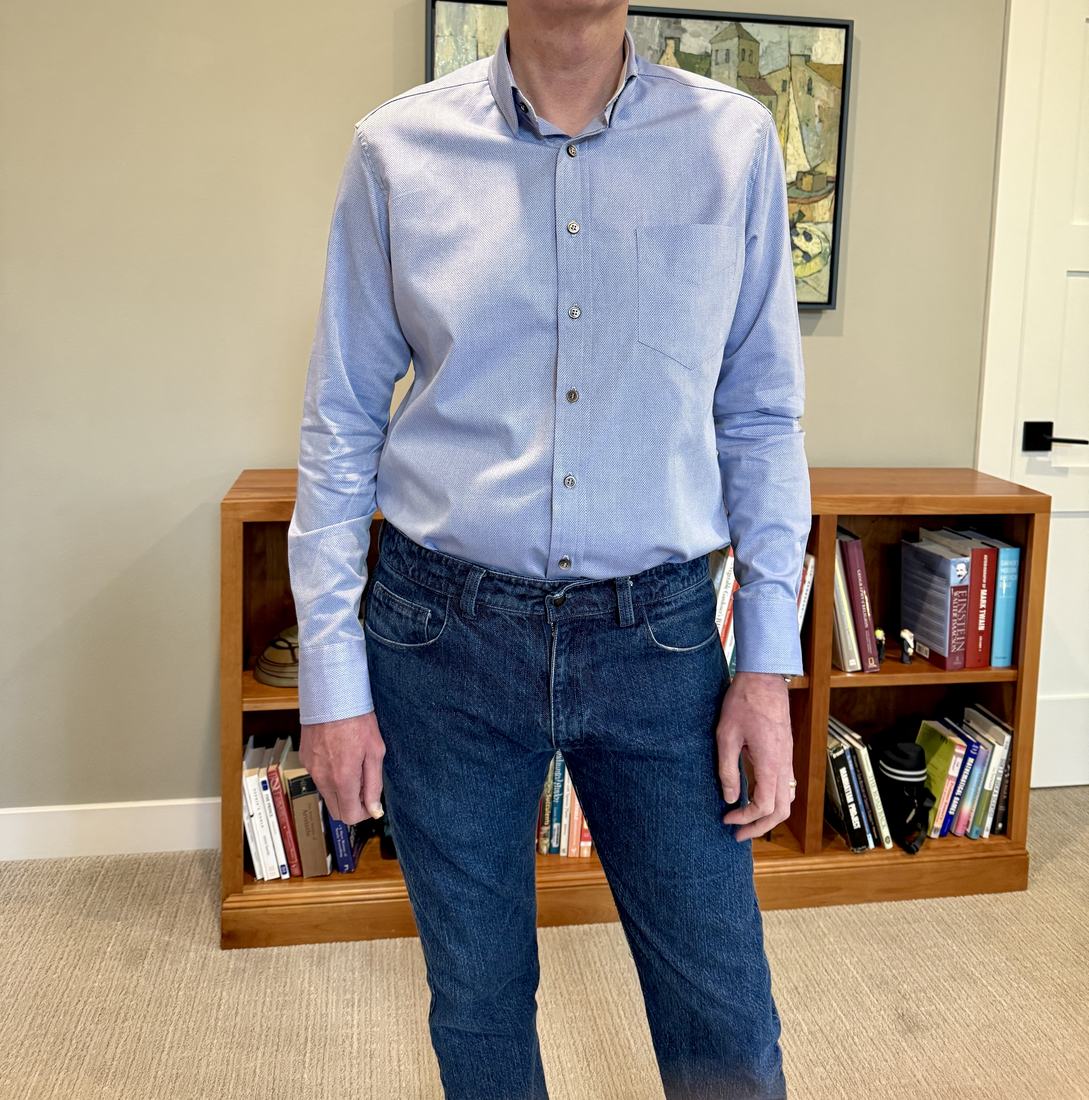
Worn. Chest pocket, one-piece back, no yoke seam showing at the front.
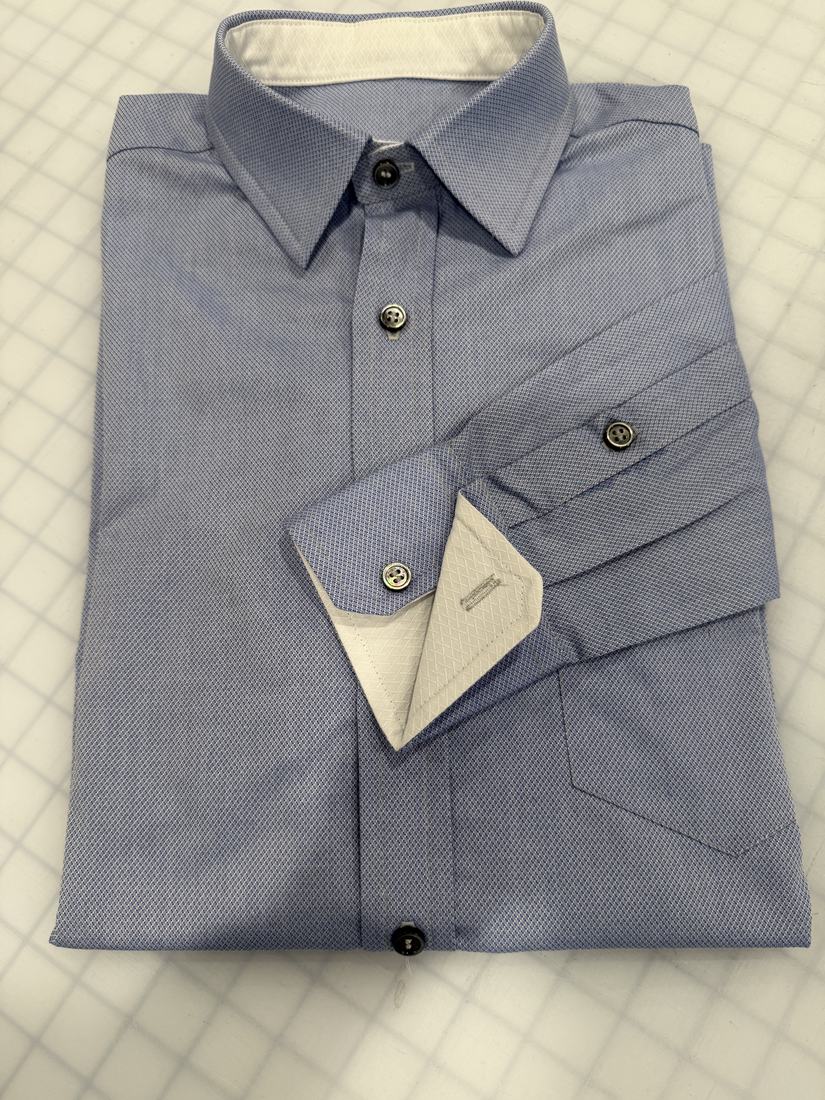
Cuff turned back. White facing on the placket, and again inside the collar stand.
Raw denim, gold topstitch
Custom jeans in raw denim, with a custom designed arcuate on the back pockets.
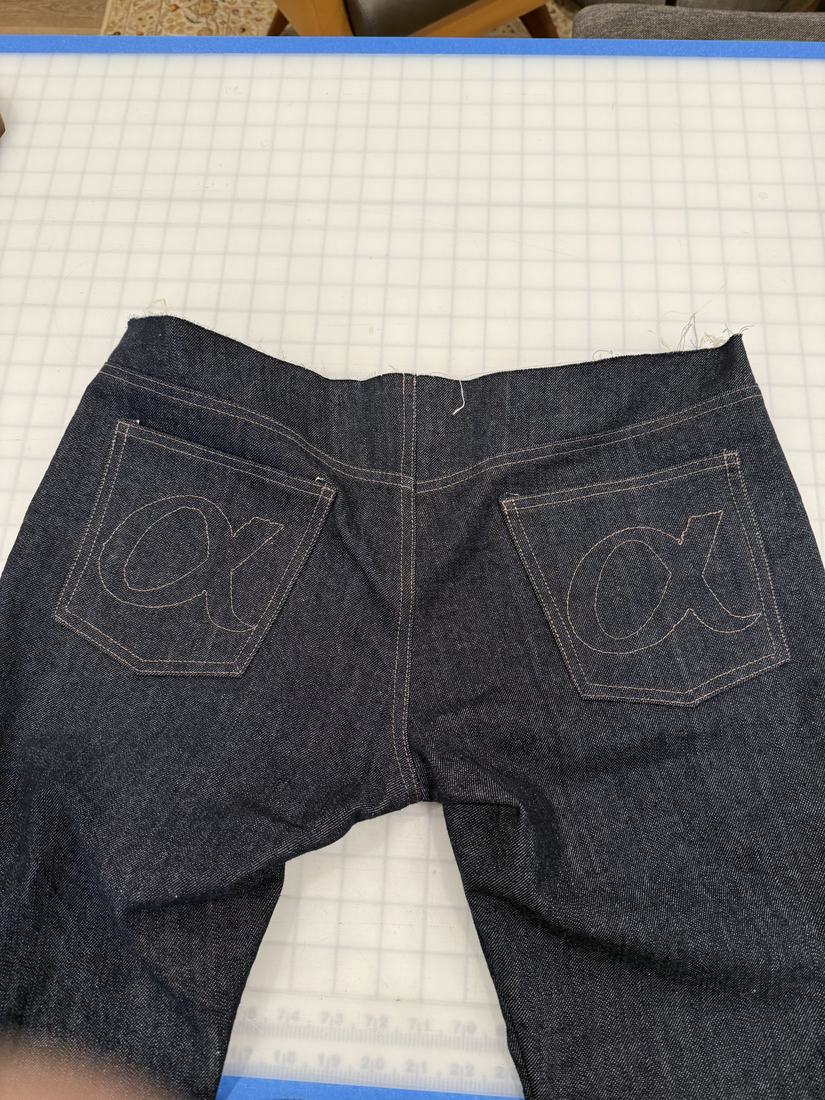
Both back pockets, matched.
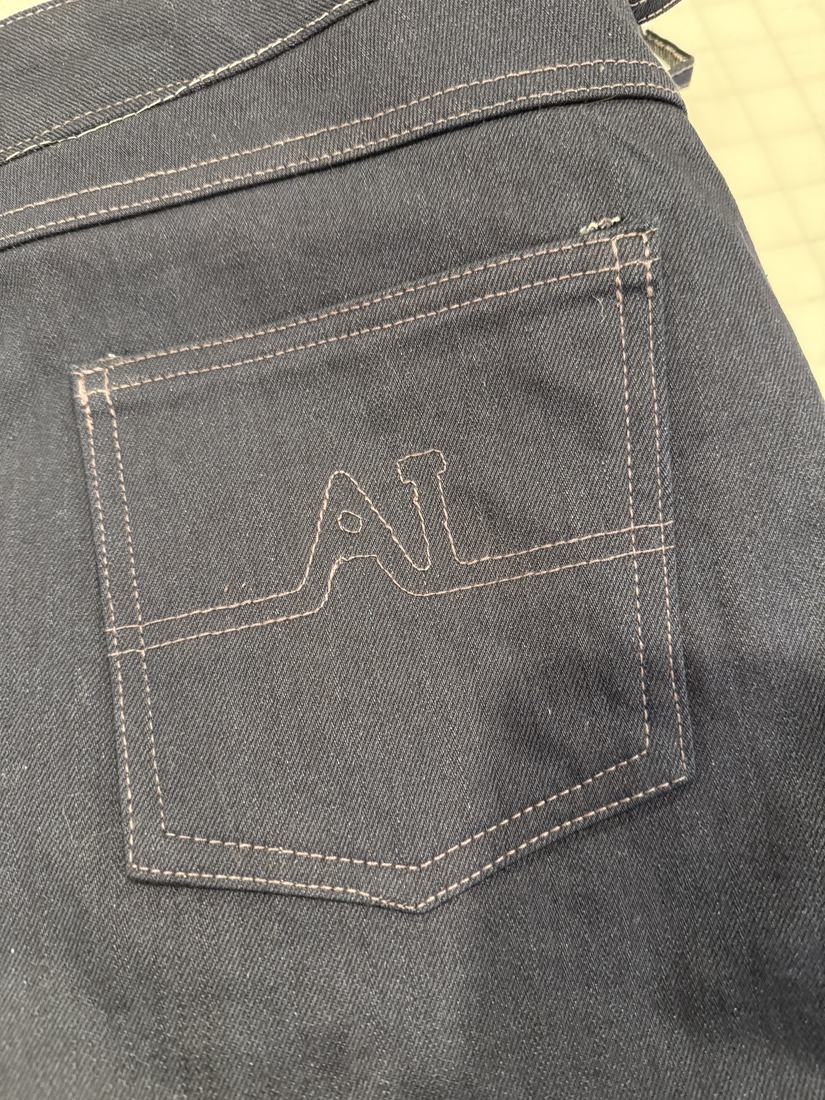
The arcuate close up, in gold topstitch thread.
Printed cotton, padded
Made to fit one camera and nothing else. Padded body, zip top, matching strap, in a Starry Night print that turned out to have ducks in it.
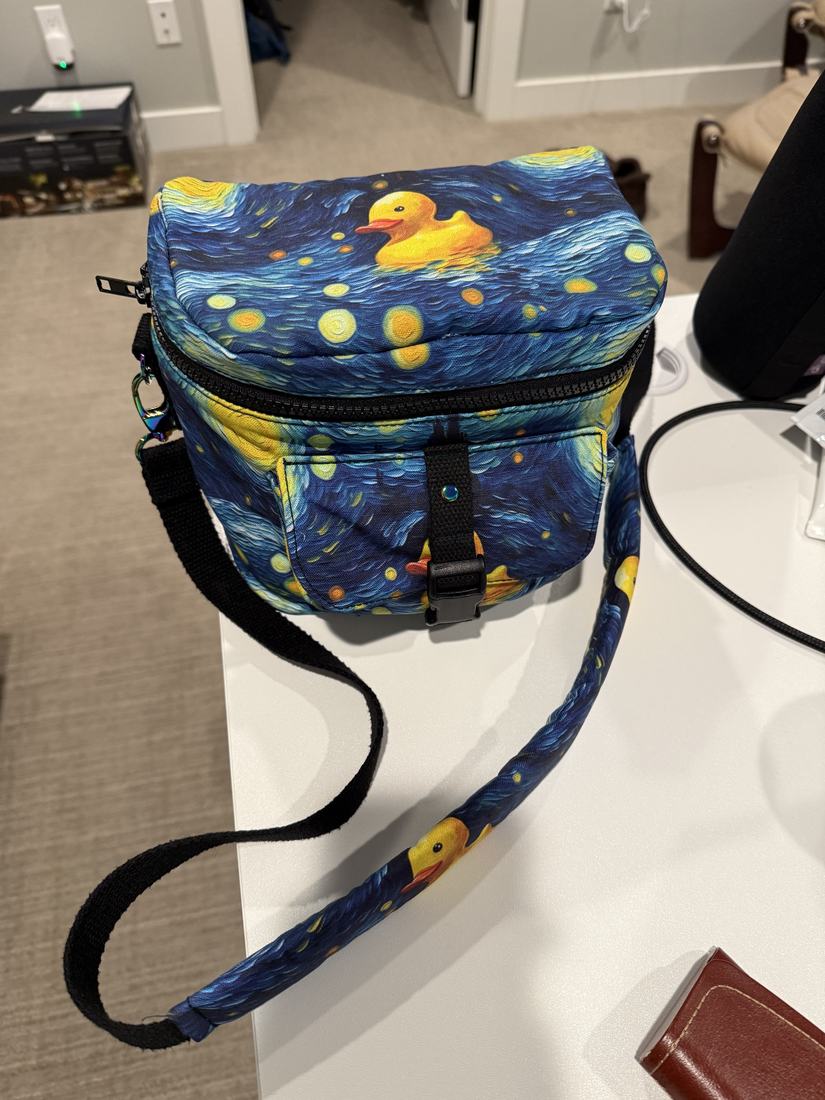
Closed, with the strap coiled beside it.
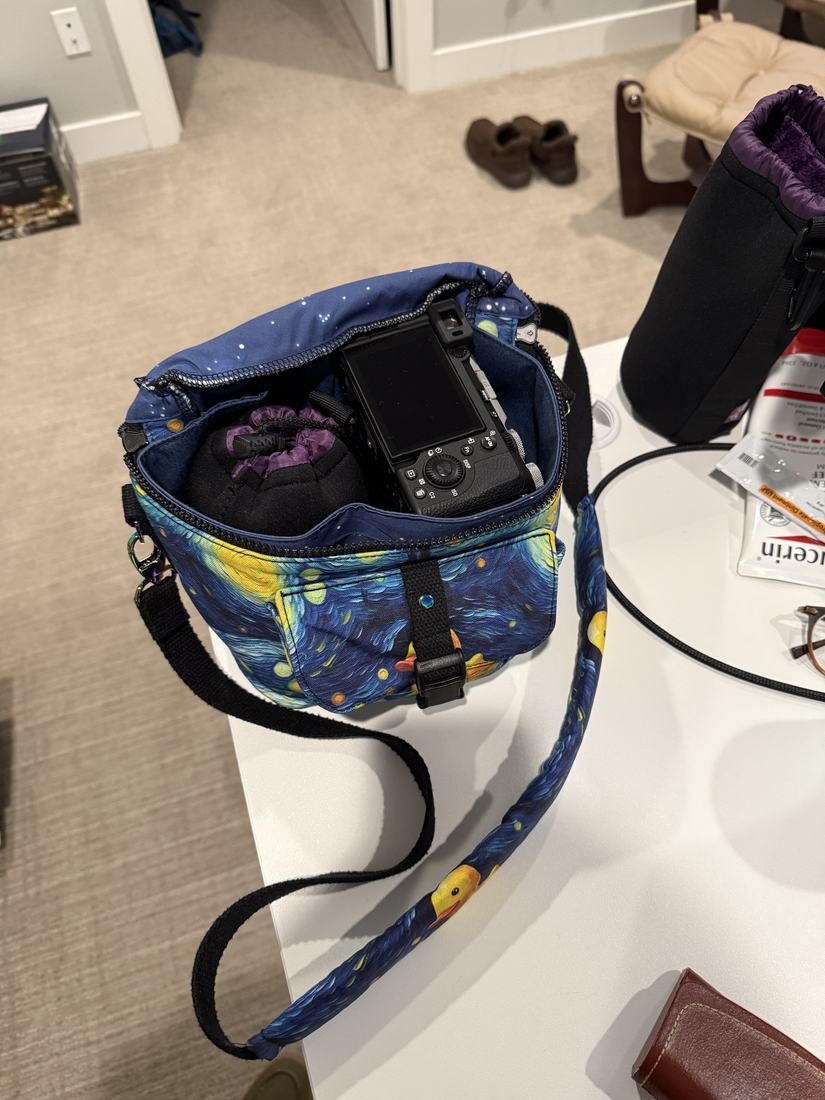
Open, with the camera in. It only just fits, which was the point.
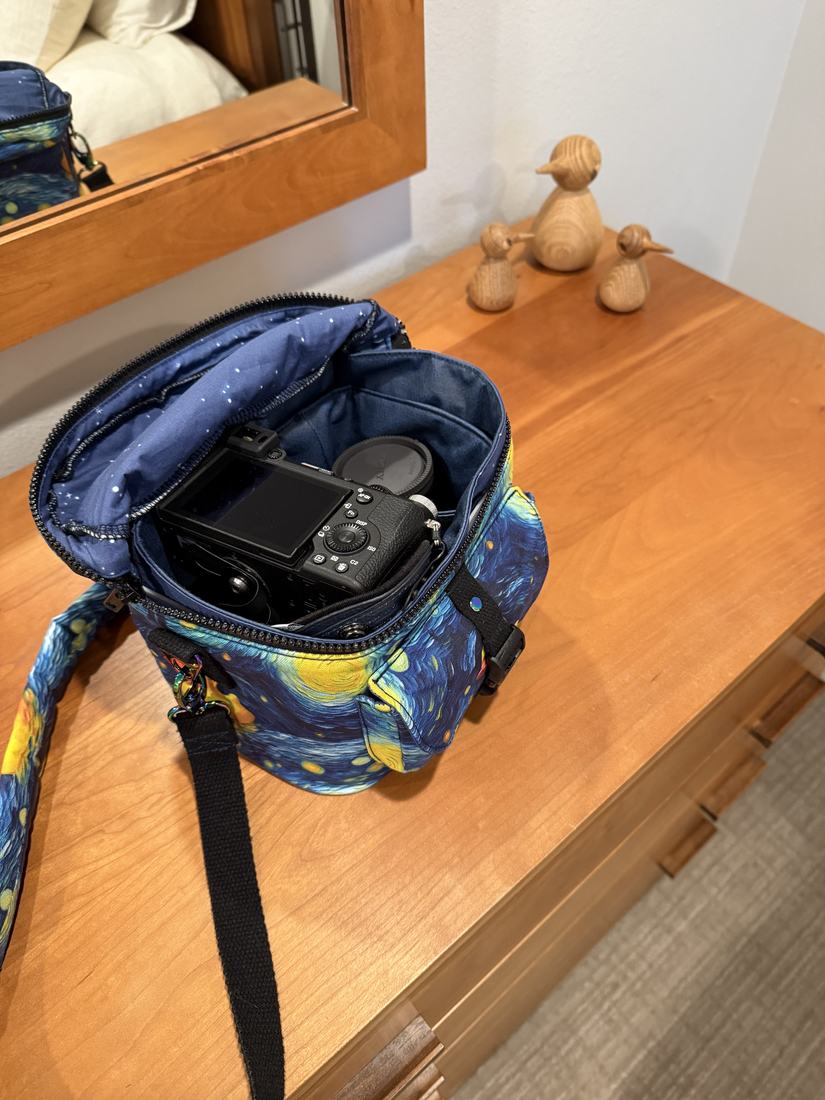
Padded all the way round, including the base.
Natural linen, striped cotton lining
Natural linen lined in an Italian cotton with a fine black and red stripe, and the shirt fabric turning up inside the breast pocket. Eight stages from a sleeveless shell to wearing it out.
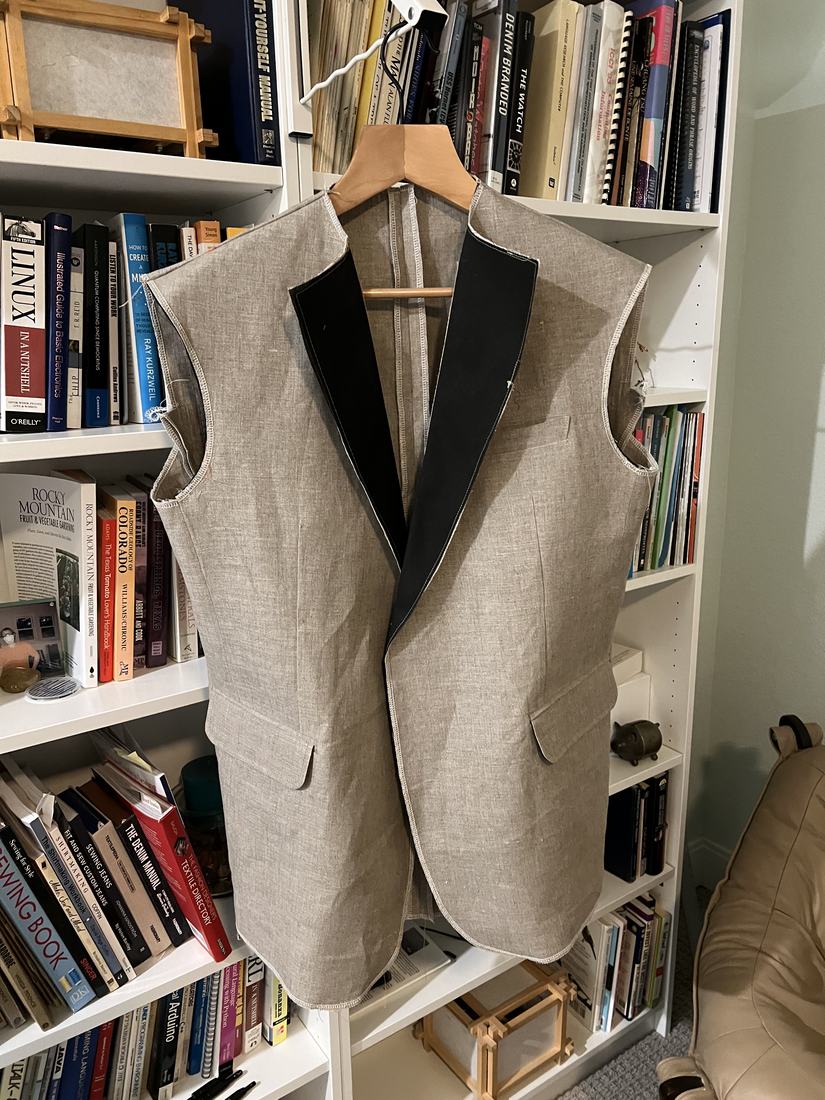
The body on a hanger before the sleeves went on. The dark panels are the interfacing that shapes the lapel.
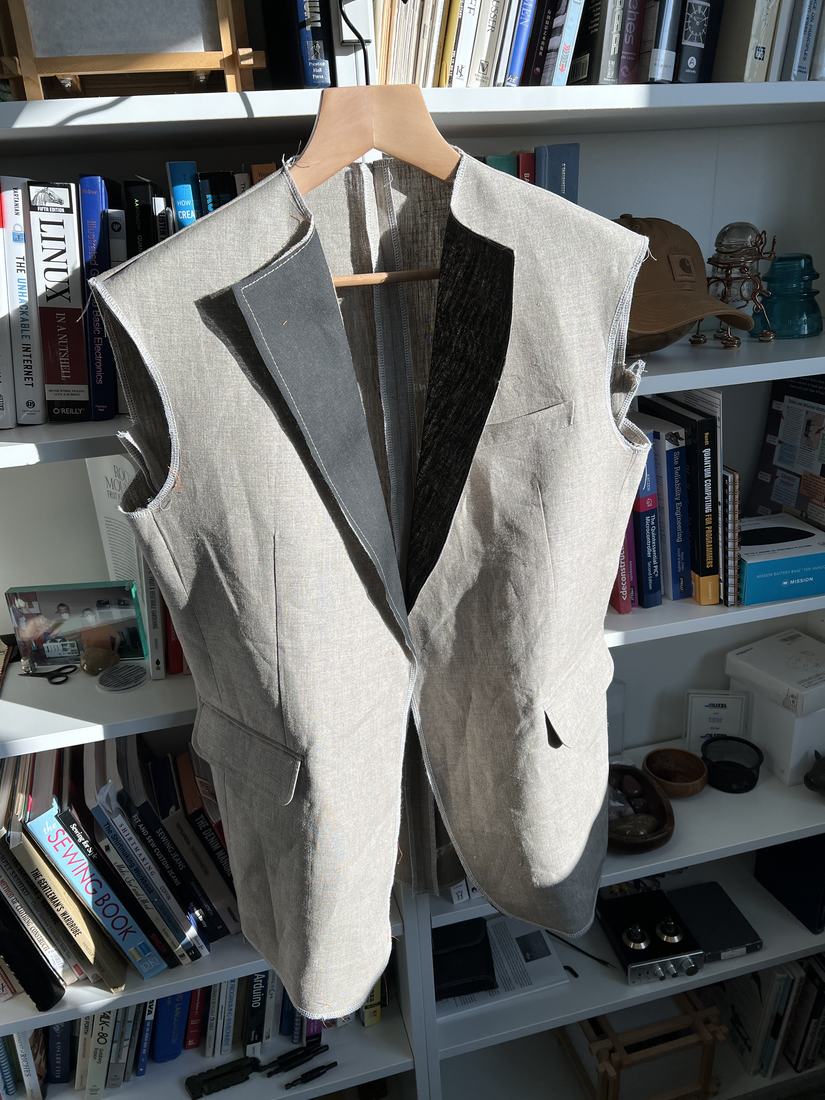
Held open. Interfacing on both lapels, cut to follow the roll line.
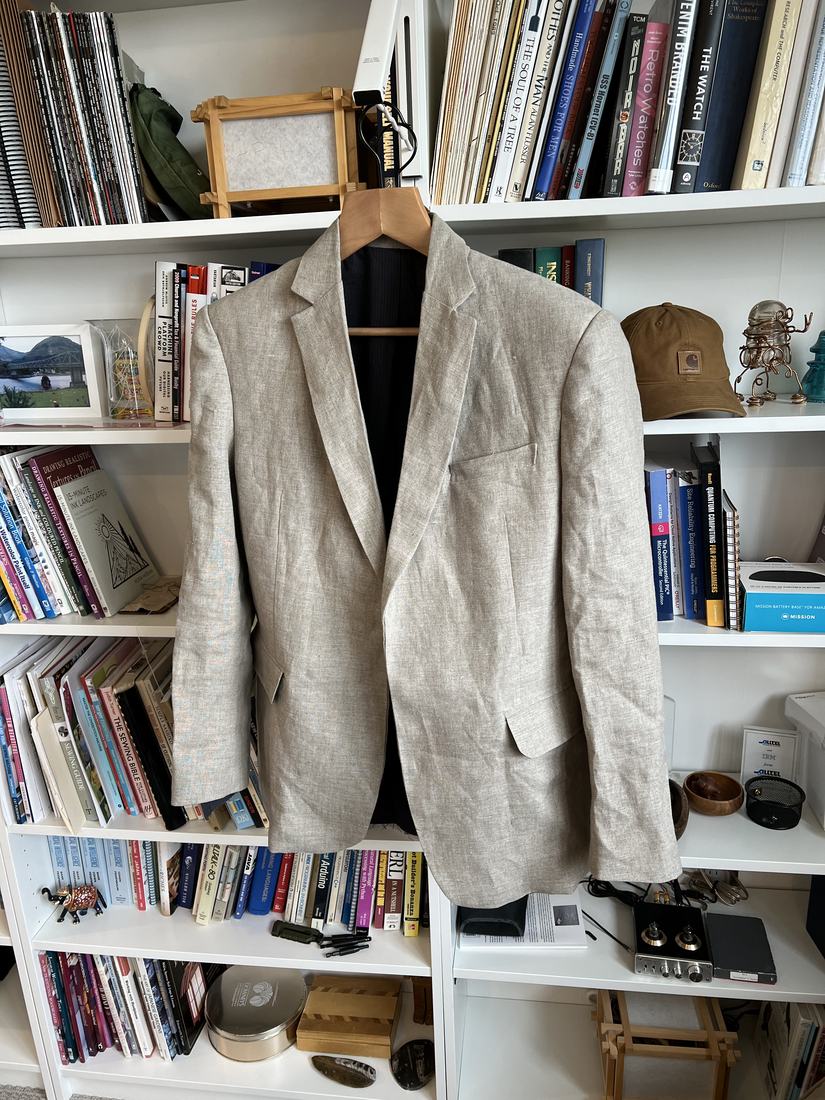
Sleeves on, hanging straight. Everything from here is finishing.
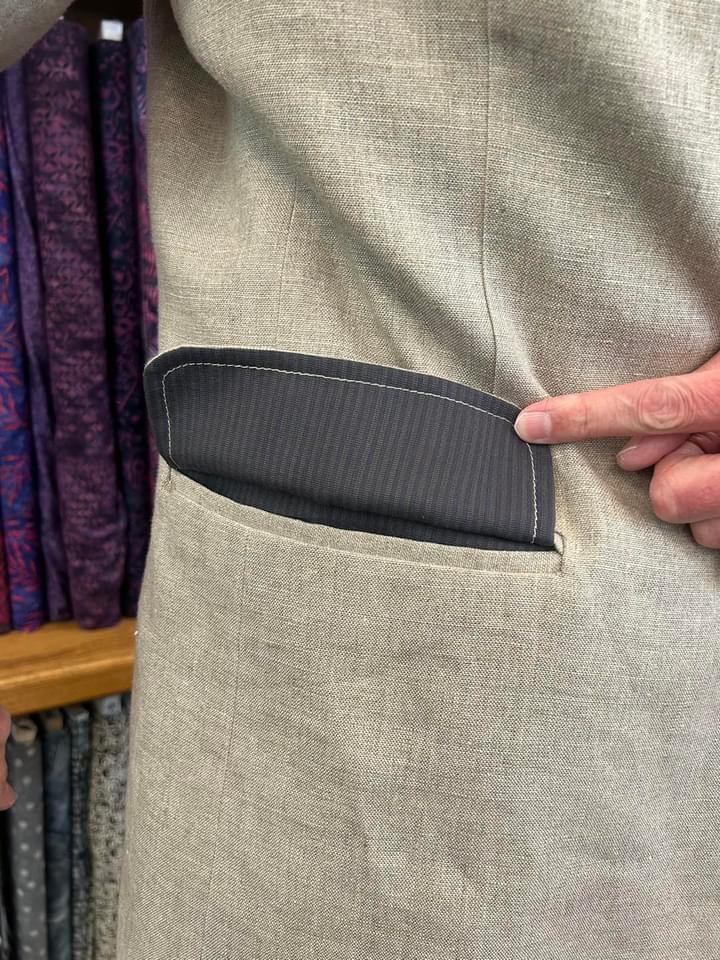
Hip pocket flap, lifted to show the same striped cotton underneath.
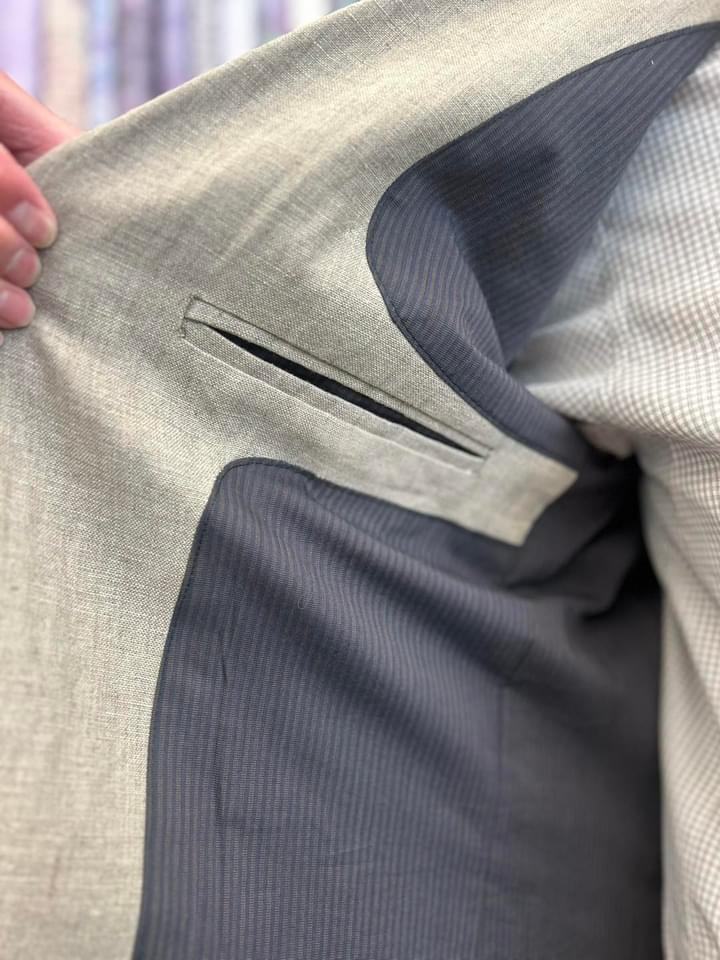
Inside pocket, welted through the linen at the edge of the lining — an Italian cotton with a fine black and red stripe that reads as plain grey from any distance.
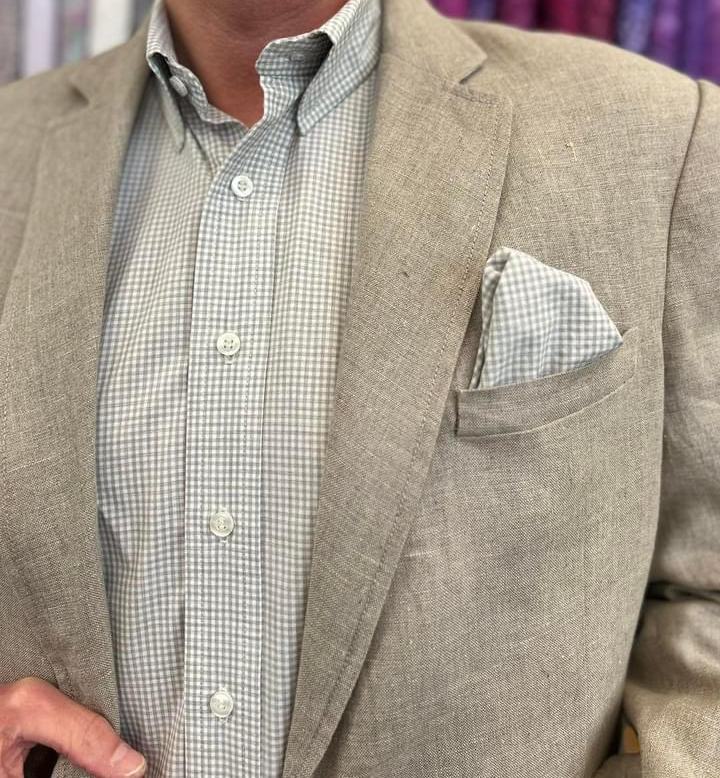
Breast pocket turned out. The bag is cut from the same fabric as the shirt.
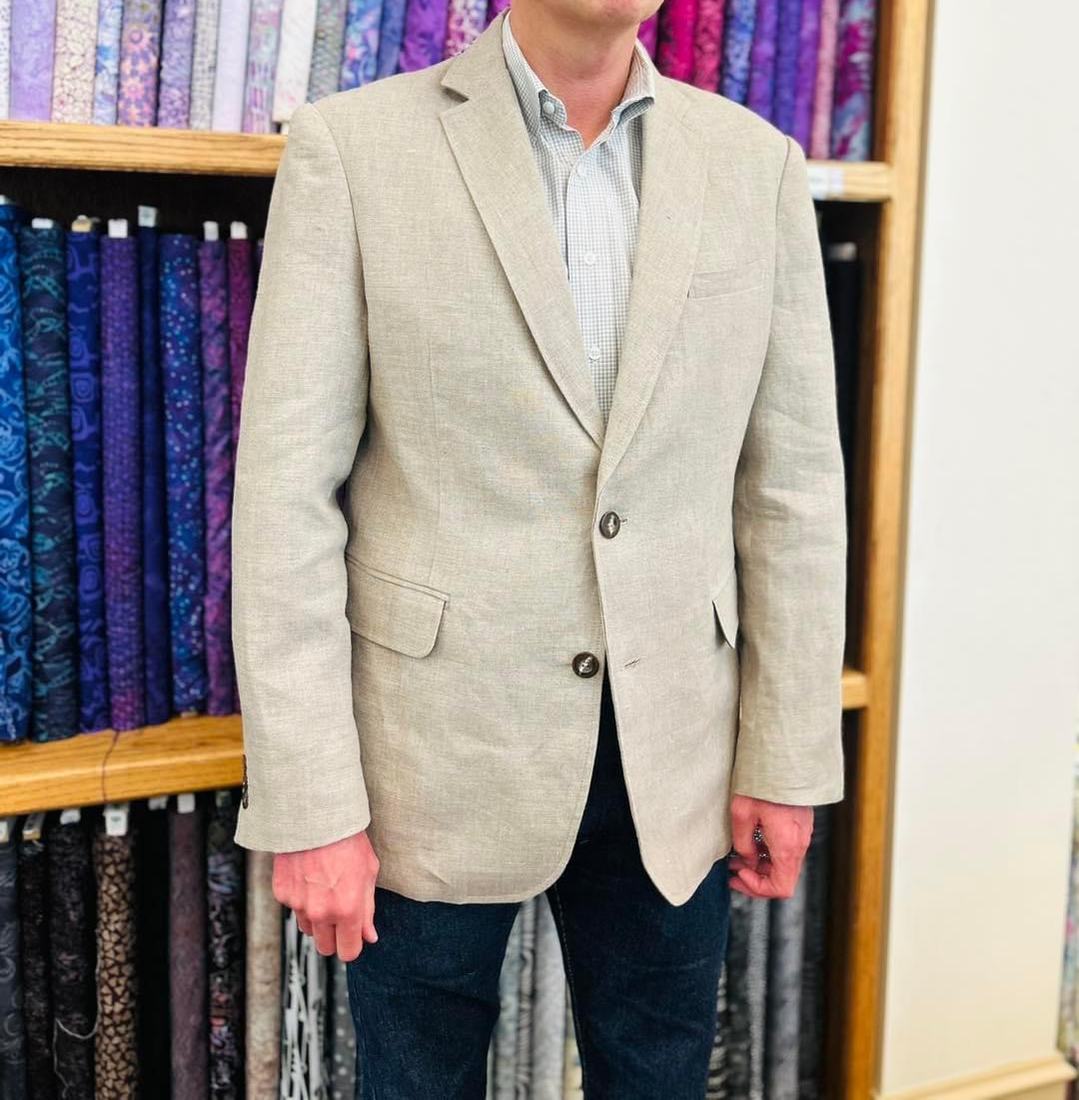
Finished and buttoned. Linen creases the moment you put it on, which is the point.
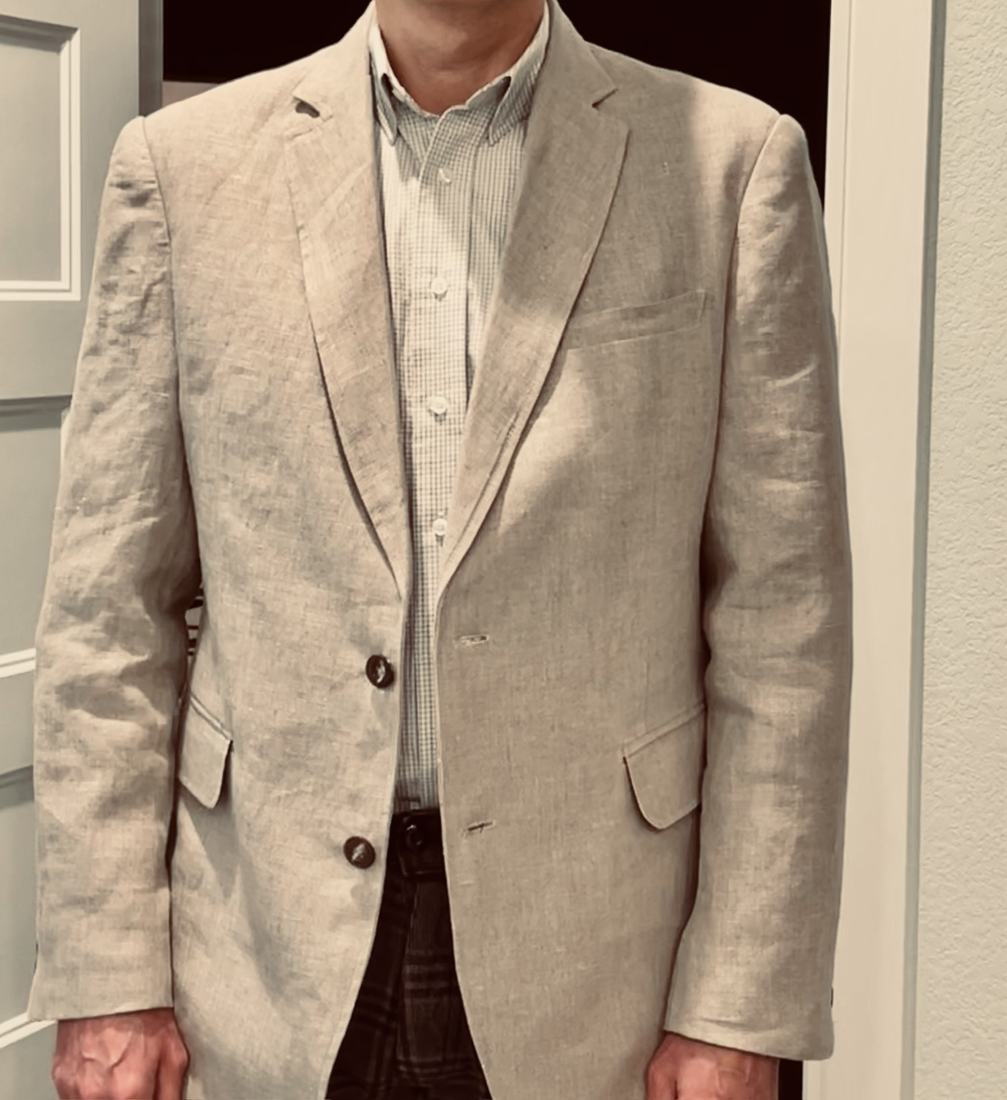
Same jacket, warmer light — the natural linen reads much darker.
Computers, wire and graphite, going back to the Kaypro. Every project has moved onto three pages, one per area.